




Press Freedom: Coalition Denounces Journalist Daniel Ojukwu’s Detention, Calls for Immediate Release
A coalition of media and civil society organisations has condemned the remand of Daniel Ojukwu, a Foundation for Investigative Journalism reporter, at Abuja’s Kuje Correctional Centre over a...

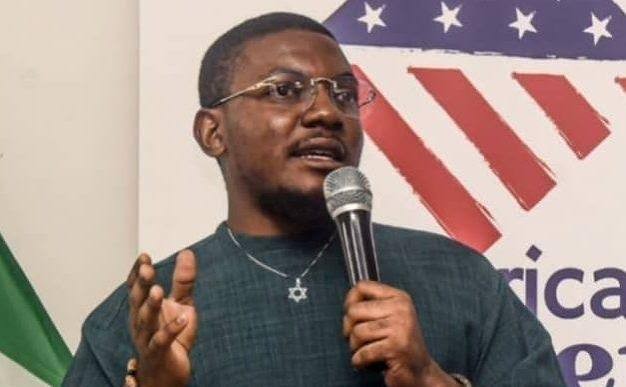
A coalition of media and civil society organisations has condemned the remand of Daniel Ojukwu, a Foundation for Investigative Journalism reporter, at Abuja’s Kuje Correctional Centre over a published investigative report, calling it a disturbing attack on press freedom and democratic accountability in Nigeria.
The coalition, which includes the Accountability Lab Nigeria; BudgIT; Cable Newspaper Journalism Foundation; Centre for Journalism Innovation and Development (CJID); Dataphyte Foundation; Digital Africa Research and Safety Lab (DigiAfricaLab); Digital Rights Lawyers Initiative (DRLI); Enough is Enough (EiE) Nigeria; Gatefield Impact Foundation; Global Rights; Hope Behind Bars Africa; International Press Centre (IPC); Media Rights Agenda (MRA); Network of University Legal Aid Institutions (NULAI) Nigeria; Socio-Economic Rights and Accountability Project (SERAP); Techsocietal; and WikkiTimes, demanded called for Ojukwu’s immediate release and an end to what they described as the criminalisation of investigative journalism.
The Federal High Court in Abuja remanded Daniel Ojukwu after his arraignment on 12 counts involving alleged cyberstalking and criminal defamation. The charges concern investigative reports published in 2023 and 2024 about Adejoke Orelope-Adefulire, the president’s senior special assistant on sustainable development goals (SSAP-SDGs).
His investigative reports examined the expenditure of public funds by the Office of the Senior Special Assistant to the President on Sustainable Development Goals (OSSAP-SDGs), including payments relating to classroom construction projects and the implementation of solar installations.
Ojukwu pleaded not guilty to all 12 counts against him.
His counsel reportedly urged the court to allow him to continue enjoying the administrative bail previously granted by the police, arguing that he had complied with all the conditions attached to the bail, but the court declined the request, noting that the pending bail application was not yet ripe for hearing, and ordered his remand pending the determination of the application.
However, Justice Joyce Abdulmalik, presiding over the court, ordered the journalist to remain at the Kuje Correctional Centre until his bail hearing, scheduled for December 1, 2026.
The development has generated renewed concerns among media and civil society groups over the use of criminal prosecution and cybercrime legislation in cases involving investigative journalism and reporting on public officials.
In a joint statement titled “A Dangerous Attack on Press Freedom and Democratic Accountability,” the seventeen organisations described Ojukwu’s continued detention as an escalation in the use of restrictive criminal laws against journalists conducting legitimate public accountability functions.
They argued that investigative journalism plays a critical role in democratic governance by exposing irregularities in public expenditure, promoting transparency, and ensuring that public officials remain accountable to citizens.
According to the organisations, the reports that formed the basis of the prosecution raised legitimate questions about the utilisation of public resources, particularly payments of N147.1 million and N47.5 million for classroom construction projects, as well as concerns about the functionality of solar installations reportedly completed under the projects.
They maintained that questions surrounding the expenditure of public funds should ordinarily attract transparency, explanations, and institutional accountability rather than intimidation or criminal prosecution of journalists.
The organisations noted that public officials and institutions entrusted with managing public resources have a responsibility to provide explanations about their decisions and expenditure, particularly where such decisions directly affect citizens and public services.
They stressed that the role of the media in scrutinising government activities is constitutionally recognised and remains fundamental to democratic governance.
The coalition further drew attention to Sections 22 and 39 of the 1999 Constitution of the Federal Republic of Nigeria, as amended, which recognise the responsibilities of the mass media and guarantee freedom of expression.
Section 22 provides that the press, radio, television and other agencies of the mass media shall at all times be free to uphold the fundamental objectives contained in the Constitution and uphold the responsibility and accountability of the government to the people.
Similarly, Section 39 guarantees the right to freedom of expression, including the freedom to hold opinions and receive and impart ideas and information without interference. The organisations also referenced Article 9 of the African Charter on Human and Peoples’ Rights and Article 19 of the International Covenant on Civil and Political Rights (ICCPR), both of which protect freedom of expression and the right to seek, receive and disseminate information.
They argued that Nigeria, as a signatory to these international human rights instruments, has an obligation to protect journalists from arbitrary detention, intimidation and reprisals arising from the performance of their professional responsibilities.
The coalition maintained that where a publication is considered inaccurate or defamatory, affected individuals and institutions should pursue appropriate legal remedies in a manner consistent with constitutional guarantees and Nigeria’s international human rights obligations.
It warned against turning the criminal justice system into an instrument for silencing public scrutiny, discouraging whistleblowing or shielding public officials from accountability.
The organisations warned that the implications of Ojukwu’s detention extend beyond him and his employer, FIJ, to the wider media community, civil society organisations, whistleblowers and citizens who demand accountability from public officials.
According to the coalition, when journalists are exposed to detention and criminal prosecution for investigating government expenditure, the ability of the media to perform its constitutional watchdog function becomes increasingly threatened.
It added that a society in which journalists are afraid to investigate public institutions creates an environment in which corruption, abuse of power and impunity can thrive without adequate scrutiny.
The coalition’s intervention has also renewed attention to concerns surrounding the application of the Cybercrimes (Prohibition, Prevention, etc.) Act in cases involving journalists and freedom of expression.
They called on relevant authorities to end the misuse of the Cybercrimes Act and criminal defamation provisions as instruments for suppressing independent journalism and freedom of expression, and to immediately release Ojukwu and grant bail pending the determination of the charges against him.
“We emphasise that press freedom is not a privilege granted at the discretion of public officials but a fundamental democratic guarantee. Journalists must be able to investigate public institutions, question the management of public resources and report matters of public interest without fear of imprisonment, harassment or reprisals.
The Nigerian government cannot credibly profess commitment to transparency, anti-corruption and democratic governance while journalists who investigate public expenditure face detention and criminal prosecution.
Mr. Ojukwu must not be punished for doing his job. His immediate release is imperative, and the criminalisation of investigative journalism must end”, the statement partly reads.






No Comment! Be the first one.