




2027 Elections: Yiaga Africa Anticipates High Turnout, Warns of Distrust, Vote Buying, Insecurity
Although the electoral commission and other stakeholders are preparing for the 2027 general elections and Nigerians appear willing to vote, Yiaga Africa warns that fears of violence, declining trust...

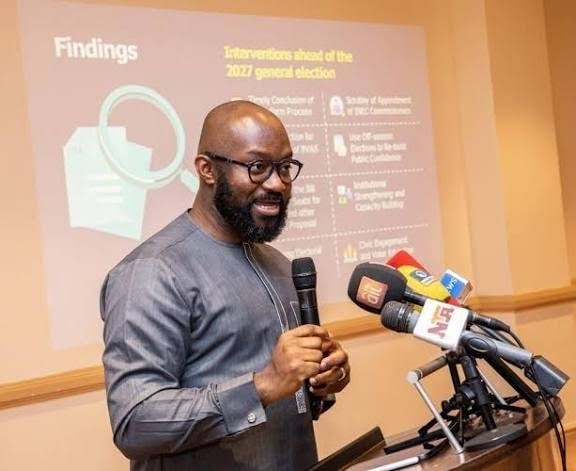
Although the electoral commission and other stakeholders are preparing for the 2027 general elections and Nigerians appear willing to vote, Yiaga Africa warns that fears of violence, declining trust in the commission, vote buying, and insecurity could discourage millions of citizens from participating.
Yiaga Africa announced the findings on Wednesday in its latest National Voting Intentions Survey (NVIS 3.0), titled Willing but Wary: How Nigerians Intend to Vote in 2027. Based on interviews with 2,470 Nigerians aged 18 and above across all 36 states and the Federal Capital Territory, the survey found that 84 per cent are likely or very likely to vote in the 2027 elections.
However, the survey found that only 34 per cent of respondents were confident that the Independent National Electoral Commission (INEC) would conduct credible elections, while 61 per cent said fear of violence could deter them from voting.
The organisation noted that the methodology of the research included the conduct of interviews in September 2026 through telephone interviews and, for the first time, face-to-face engagements in rural communities, and the aim was to track changes in voter intentions since the first and second rounds of the survey conducted in December 2025 and March 2026, respectively.
The research identified insecurity as the main barrier to participation, with 61 per cent of respondents saying that fear of violence could prevent them from voting. Concern was highest in the Northeast, where 78 per cent feared violence could keep them from the polls, while 83 per cent said improved security would make them more likely to vote.
Yiaga Africa said the findings indicate that Nigerians are willing to participate in elections but that the institutions responsible for security, electoral credibility, and logistics must address the barriers preventing that willingness from translating into actual turnout.
The research found that public confidence in the Independent National Electoral Commission (INEC) had declined. Only 34 per cent of respondents believed the commission would conduct credible elections, down from 45 per cent in the two previous survey rounds. Meanwhile, 39 per cent said they lacked confidence in INEC, with distrust highest in the South-East at 62 per cent and the South-South at 57 per cent.
However, regardless of the low institutional confidence in the electoral body, citizens appeared to have greater trust in electoral technology, with 49 per cent expressing trust in the BVAS accreditation system and IReV result-transmission platform, stating that awareness of electoral reforms has also increased significantly, rising from 24 per cent in December 2025 to 62 per cent in the latest survey.
The survey also found that government performance and economic conditions could shape voting decisions: 54 per cent of respondents disapproved of the President’s performance, while 71 per cent rated the economy as poor or very poor.
The survey identified a desire for leadership change as the main motivation for voting, cited by 49 per cent of respondents. The leading policy priorities were the economy and jobs at 38 per cent, followed by security at 36 per cent.
Yiaga Africa said the findings indicate that political parties and candidates will need to address voters’ concerns about economic conditions, security, and government performance as the 2027 elections approach.
The survey also indicated that young generations do not trust the electioneering system, resulting in a generational gap in voting intentions, noting that only 40 per cent of young respondents said they were very likely to vote, compared with 64 percent of respondents aged 61 and above.
The report found that young people feared electoral violence, had lower trust in INEC and security agencies, and relied more heavily on social media for election information. It also noted that, following the 2023 elections, public confidence in the judiciary remained low, with 63 percent of respondents expressing little or no confidence that the courts would resolve electoral disputes fairly.
Speaking on the findings, Safiya Bichi, Head of Knowledge Management and Learning at Yiaga Africa, said Nigerians had not lost interest in elections but faced significant barriers to translating their willingness into actual participation.
“Nigerians have not given up on elections. They want to vote, they see it as their duty and they believe their votes can make a difference. Low turnout in Nigeria is a conversion problem, not an apathy problem,” she said.
She added that institutions and other actors responsible for security, electoral credibility and logistics must address these challenges quickly, as little time remained before the presidential election on January 16, 2027.
Recommendations
In its recommendations, Yiaga Africa called on the Federal Government and security agencies to publish a threat-based national election security plan through the Inter-Consultative Committee on Election Security (ICCES) by November 2026, with priority attention to the Northeast, Northwest and North-Central regions. The organisation also urged security agencies to protect voters and election materials.
Yiaga Africa also called on INEC to publicly commit to uploading polling-unit results to IReV in real time, publish and test its results-management protocol, and undertake confidence-building measures in the South-East and South-South.
The recommendation partly reads “Federal Government and security agencies: Publish a threat-based national election security plan through ICCES by November 2026, prioritising the North-East, North-West and North-Central, and protect voters, not only election materials.
“INEC: Make a binding public commitment to real-time upload of all polling-unit results to IReV, publish and stress-test its results-management protocol, and undertake targeted confidence-building in the South-East and South-South.
“Judiciary: Resolve pre-election candidacy disputes before ballots are printed and publish clear timelines for election petitions.
“Political parties and candidates: Compete on costed plans for security and the economy, and sign and honor the Peace Accord and an enforceable anti-vote-buying pledge.
“Civil society and media: Shift voter education from exhortation to assurance, target young people, women and under-reached zones, and counter election misinformation.









No Comment! Be the first one.