






SERAP Sues INEC Over Failure to Disclose Political Contribution Limits
The Socio-Economic Rights and Accountability Project (SERAP) has sued the Independent National Electoral Commission (INEC) for allegedly failing to disclose political contribution limits under...

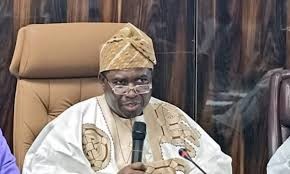
The Socio-Economic Rights and Accountability Project (SERAP) has sued the Independent National Electoral Commission (INEC) for allegedly failing to disclose political contribution limits under Section 91 of the Electoral Act 2026. SERAP is asking whether INEC has used its statutory power to set those limits and, if so, why they have not been publicly released or communicated to political parties, candidates, donors, and Nigerians.
The think tank organisation filed the lawsuit through its lawyers, Oluwakemi Agunbiade, Kehinde Oyewumi, Andrew Nwankwo and Valentina Adegoke, noting that lack of transparency in the spending and donations received by politicians during elections makes it difficult for voters, journalists, and civil-society organisations to scrutinise political financing if the applicable limits are not easily accessible or if there is no publicly known mechanism for monitoring compliance.
SERAP had earlier written to INEC and Professor Joash Amupitan, Chairman of the Independent National Electoral Commission (INEC), to disclose whether the Commission has exercised its statutory power to prescribe limits on political contributions under section 91 of the Electoral Act, 2026, and, if so, to publish the applicable limits and widely communicate them to political parties, candidates, donors and the Nigerian public.”
SERAP also urged the commission to disclose the systems, personnel, and procedures it has put in place to monitor, investigate, and enforce compliance with political contribution and campaign expenditure limits during the ongoing 2027 electoral process.
The failure of the commission to grant SERAP’s request drew the lawsuit, stating that their non-disclosure leaves Nigerians unclear about the rules governing political donations and raises questions about compliance with the law.
In the suit number FHC/ABJ/CS/2114/2026 filed last week at the Federal High Court in Abuja, SERAP is seeking: “an order of mandamus to direct and compel INEC to urgently disclose whether it has prescribed limits on political contributions, the specific limits prescribed, and the measures taken to publish and communicate them to political parties, candidates, donors and the public.”
SERAP is also seeking: “an order of mandamus to direct and compel INEC to disclose the systems and procedures in place to monitor, investigate and enforce compliance with prescribed limits on political contributions and campaign expenditure, particularly in preparation for the 2027 general elections.”
In the suit, SERAP is arguing that: “greater transparency in political financing is essential to ensuring that the 2027 elections are conducted on a level playing field and that citizens can make free and informed political choices.”
SERAP is also arguing that: “INEC’s constitutional responsibility is not simply to receive financial statements from political parties. The Nigerian Constitution 1999 (as amended) requires the Commission to examine political-party finances, conduct necessary investigations and report to the National Assembly.”
According to SERAP, “publishing these reports would enable Nigerians to know whether these constitutional and statutory responsibilities have been effectively discharged.”
The increasing monetisation of Nigeria’s elections, alongside the potential misuse of state institutions, poses serious threats to democratic integrity and electoral competition.”
“INEC should be compelled to disclose and publish the political-contribution limits prescribed under section 91 of the Electoral Act, 2026, as well as political parties’ latest financial statements, audited accounts, sources of funds, assets, liabilities, and election-expenditure returns for 2023–2025.”
“INEC should also be compelled to disclose its examination and audit reports under sections 225 and 226, including reports submitted to the National Assembly, and details of enforcement action taken for political-finance violations.”
“The Court should further compel INEC to disclose its political-finance monitoring and enforcement arrangements for the 2027 general elections, including the parties that submitted post-2023 contribution reports, the dates of submission, and action taken against parties that failed to comply with statutory reporting requirements.”
“The reliefs sought would enable citizens to identify excessive, undisclosed or potentially illicit political financing before it can distort electoral competition, rather than only after votes have been cast.”
“Effective political-finance regulation is an important safeguard for constitutional democracy, equality of political participation, freedom of expression and association, electoral integrity and citizens’ meaningful participation in public affairs.”
“Nigeria has a persistent problem of political parties failing to disclose campaign contributions. Such non-compliance has been described as systemic, while the absence of clear and effective sanctions for default has weakened INEC’s ability to enforce compliance.”
“Nigeria has long faced serious challenges in regulating political finance, including concerns about excessive campaign spending, opaque sources of political funding, weak disclosure and reporting, and limited enforcement of statutory spending and contribution rules.”
“Previous assessments of Nigeria’s elections have identified significant gaps between the legal framework and its practical implementation, including concerns that spending limits can be circumvented, political-party expenditure is insufficiently regulated or transparently disclosed, and violations are rarely identified and effectively sanctioned.”
“These concerns are particularly significant given the scale of campaign expenditure and changes in the statutory spending and contribution thresholds under Nigeria’s constitutional and evolving electoral framework.”
“INEC has commenced the formal preparations for the 2027 General Elections, marking an important stage in the electoral process.”
“Article 25 of the International Covenant on Civil and Political Rights (ICCPR) guarantees citizens the right to participate in public affairs and to vote and be elected at genuine periodic elections. Article 9 of the African Charter on Human and Peoples’ Rights protects the right to receive information, while Article 13 guarantees the right to participate freely in the government of one’s country.”









No Comment! Be the first one.