
2027 Elections: Debates Begin Alongside the Campaigns
A day before the ban on political campaigns for the 2027 elections was lifted, the National Peace Committee held an event in Abuja where presidential candidates and their parties signed a peace...


A day before the ban on political campaigns for the 2027 elections was lifted, the National Peace Committee held an event in Abuja where presidential candidates and their parties signed a peace accord pledging peaceful campaigns. However, some notable candidates and parties did not attend.
Presidential candidates and party leaders signed the first National Peace Accord for the 2027 general elections on August 18, 2026, at the International Conference Centre in Abuja. Organised by the National Peace Committee and the Kukah Centre, the pact commits political actors to non-violent, issue-based campaigns in the run-up to the elections.
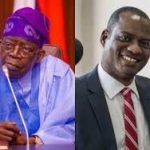
The signing event was unprecedented: the National Peace Committee introduced it to urge politicians to run clean, violence-free campaigns that would not inflame the polity. However, several prominent candidates were absent, including incumbent President Bola Tinubu of the All Progressives Congress and leading opposition candidate Alhaji Atiku Abubakar of the African Democratic Congress.
Their absence drew public criticism, especially of President Tinubu, whom many expected to take the opportunity to promote peaceful electioneering. Alhaji Abubakar, meanwhile, said he would not attend any event for contestants if President Tinubu was absent. His reasoning remains unclear, as the President may have been occupied with official duties.
The candidates agreed to anchor public discourse strictly on party manifestos, targeting core national challenges like the economy, security, healthcare, and infrastructure. Also, to completely shun personal insults, character assassination, and inflammatory rhetoric
The event set the stage for the debates, signalling that Nigerians would witness a serious contest rather than the coronation that some ruling-party members had predicted. After candidates’ and running mates’ credentials were published, critics questioned the omission of President Tinubu’s primary and secondary school records. As the incumbent, he is likely to face sharper attacks as the opposition seeks to turn the campaign and election into a referendum on his administration.
Those were only preludes. The Atiku Abubakar camp launched a sharper attack when he promised to restore the fuel subsidy to ease Nigerians’ hardship. The pledge struck at a sensitive point for the Tinubu administration, as subsidy removal has been central to its reform agenda. The ruling party responded by accusing Atiku Abubakar of political opportunism, noting that he had supported subsidy removal during the last campaign.
For many Nigerians, this is the real debate: they want serious issues addressed in ways that improve the campaign’s quality and move it away from personal attacks, ethnic appeals, and religious rhetoric. This also makes the government accountable to the electorate, rather than treating them with contempt.
The Fuel Subsidy Debate
Former Vice President and African Democratic Congress (ADC) presidential candidate Atiku Abubakar has pledged to restore a targeted fuel subsidy if elected president. Clarifying conflicting statements from his media aides, Atiku stated, “On the question of subsidy, my position has not changed and will not change; I will restore it!”
Atiku strongly criticised President Bola Tinubu’s handling of the subsidy removal, calling the full withdrawal on his first day in office “heartless, inhuman, and wicked”. He said the move pushed millions of Nigerians into poverty without providing immediate transport alternatives.
He further argues that a nation’s wealth should be measured by workers’ purchasing power, not by government revenue. He also questioned how the trillions of naira reportedly saved since the May 2023 subsidy removal have been used, saying ordinary citizens have seen no measurable gains in healthcare, infrastructure, or security.
Atiku’s alternative proposal is not a full return to past practices associated with the fuel subsidy. He described it as a targeted intervention to ease transportation, food, and daily living costs for ordinary Nigerians. He maintains that the restored subsidy would not finance the old “import racket” but would instead be linked directly to domestic refining and local production.
His team added that the subsidy would remain in place until local refining expands, supply stabilises, and stronger market competition brings prices down naturally.
Tinubu’s Counter Argument
On the other hand, President Bola Tinubu strongly criticised Atiku’s proposal to restore the petrol subsidy, describing it as a demonstration of “serious ignorance” of governance and the economy.
Speaking at the State House in Abuja while receiving Osun State Governor Ademola Adeleke, Tinubu targeted Atiku’s 2027 campaign promise, stating that reverting to the subsidy regime would be a significant setback for the nation.
Tinubu defended his May 2023 decision, arguing that the previous subsidy regime crippled state governments. He noted that 27 states were unable to pay workers’ salaries before he took office and that removing the subsidy freed up critical federation revenue to fund infrastructure, health, and education.
There has been some miscommunication in Atiku’s strategy for managing the return of the subsidy, which has allowed Tinubu’s camp to claim that “they are confused”.
The Gathering Momentum
Subnational leaders are unlikely to back Atiku’s proposal because it could reduce the funds they receive from the Federation Account. In addition, 30 of the 36 governors already belong to the President’s party. The government on Wednesday hurriedly launched a $1 billion social protection programme targeting the poor as part of its reform programme to stem poverty for a particular group of Nigerians. Is this a political campaign move? It is being managed by the Ministry of Humanitarian Affairs, which has a history of problems with accountability.
There will certainly be more such programmes as the campaigns deepen and the issues become clearer. Would they endure? Would they be broad enough to touch a larger population of Nigerians?
Any measure that lowers the cost of living is likely to appeal to Nigerians, strengthening Atiku’s proposal to restore the fuel subsidy as relief from current hardship. But would it actually reduce prices, and would voters trust Atiku Abubakar with the presidency? Time will tell.