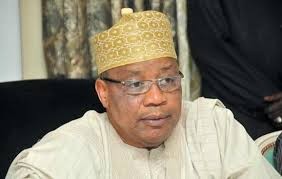
Although the Nigerian Department of State Security (DSS) initiated legal proceedings to prevent the formation of a shadow government, Professor Patrick Utomi, a distinguished economist and political activist, has formally announced the introduction of cabinet members for this government, intended to serve as an opposition to the ruling All Progressives Congress. Professor Utomi announced the
Although the Nigerian Department of State Security (DSS) initiated legal proceedings to prevent the formation of a shadow government, Professor Patrick Utomi, a distinguished economist and political activist, has formally announced the introduction of cabinet members for this government, intended to serve as an opposition to the ruling All Progressives Congress.
Professor Utomi announced the formation of a shadow government after a two-day “big tent” retreat in Abuja on Wednesday. Members include Nana Kazaure (Information), Riwang Pam (Security), Nike Omola (Women and Gender Development), and Peter Agada (Infrastructure, Urban Development, and Housing).
The activist and former presidential candidate clarified that the shadow government and cabinet are intended to provide expert oversight and serve as an active opposition to government policies, rather than assuming executive powers.
It is important to note that, during the early stages of establishing the shadow government and following significant defections of opposition members to the All Progressives Congress, the DSS initiated proceedings regarding Utomi’s proposal. The Secret Service warns that forming a shadow government in Nigeria could undermine the official government, fuel separatist actions, and threaten national security.
While the case remains in court, Professor Utomi, unfazed by the suit, stated that the lack of checks and balances is unusual and believes the situation could help guide the ruling party’s governance.
“The progress of any government is to ensure the welfare of the people; hence, there must be alternative views and reviews of government policies to enable the government to move forward in the right direction.”
He further discussed the issue of misplaced priorities within Nigeria’s legislative branch, noting that lawmakers have assumed the role of implementing constituency projects rather than focusing on their principal duty of enacting legislation for effective governance in the country.
Speaking on how the shadow cabinet would address the anomalies, Professor Utomi said, “Legislators will know that they were not elected to execute projects; they were elected to make laws for the good governance of the country. Doing otherwise would turn them into slaves, as they would be forced to beg the executives for projects to implement.
‘’With this kind of practice, the members of the legislature will not be able to perform one of their basic duties, which is checks and balances. There is data to make Nigeria great, but the problem is the absence of political will. Nigerians in government do not have the discipline to govern,” explaining that there are lots of policy somersaults in Nigeria”.
The formation of the shadow cabinet is coming barely a week after prominent opposition leaders adopted the African Democratic Congress (ADC) to challenge the ruling All Progressives Congress (APC) and President Bola Tinubu’s re-election bid.
The creation of the shadow government could also pose another dimension to opposition to the current administration ahead of the 2027 election.