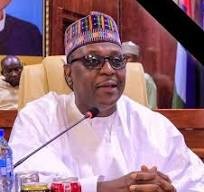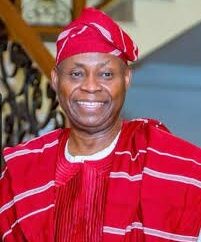
After nearly two years of political turmoil between former Rivers State Governor, now Minister of the Federal Capital Territory, Nyesom Wike, and suspended Governor Siminalayi Fubara, both have announced an end to their prolonged feud. This follows a meeting with President Bola Tinubu and other political stakeholders, where the duo expressed their intention to resolve
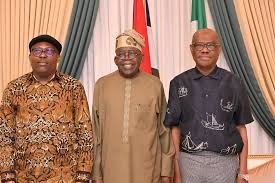
After nearly two years of political turmoil between former Rivers State Governor, now Minister of the Federal Capital Territory, Nyesom Wike, and suspended Governor Siminalayi Fubara, both have announced an end to their prolonged feud. This follows a meeting with President Bola Tinubu and other political stakeholders, where the duo expressed their intention to resolve their conflicts and restore democratic governance in the state.
The resolution of the prolonged political tension in the state was facilitated by President Bola Tinubu three months after Fubara’s removal as governor, following the declaration of a state of emergency. This reconciliation has led political analysts to question whether this development will result in Fubara accommodating Wike’s directives. State residents backing Governor Fubara have asked for the settlement terms.
Former Rivers State Governor Nyesom Wike expressed confidence in the Thursday agreement to resolve the months-long political crisis and achieve stability. He encouraged peace among his supporters and those of Fubara, asking everyone to cooperate and end animosity. He also asked his loyalists and members of the State House of Assembly, led by Martin Amaewhule, to move past their previous disagreements.
“Yes, just like humans, you disagree, and then you also have time to settle your disagreement. And that has been finally concluded today, and we have come to report to Mr. President that is what we have agreed on. So, for me, everything is over.” Wike said confidently.
Meanwhile, Fubara has welcomed the truce, attributing it to divine intervention and a new beginning for the state. “For me, it’s a day we have to thank Almighty God. For me, this day must come to be.” What we need for the progress of Rivers State is peace, and by the special grace of God, this night, with the help of Mr. President and the agreement of the leaders of the state, our leader, peace, has returned to Rivers State,” he said.
At first, the conflict between Wike and Fubara was a struggle for dominance. Wike, a political mentor who served as governor for eight years, allegedly wanted to remain involved in decision-making in Rivers State. He justified the request by highlighting his role in selecting Fubara as his successor.
Fubara, on the other hand, refused to give his predecessor the leeway to pursue his desires as the political lord of the state while he still maintained his sumptuous position as the minister of the Federal Capital Territory. He fended off Wike’s expectation that he would bring the great white hope to his group and hold Rivers State as a proxy for him. As a result, Wike moved through the remnant of his group, holding strategic positions by trying to impeach the governor.
Wike’s loyalists in the Rivers State House of Assembly filed an impeachment notice against Governor Fubara, with Fubara’s supporters allegedly causing a fire outbreak at the Assembly to prevent his removal. The pro-Wike members then defected to the All Progressives Congress, leading Fubara and his supporters to question their eligibility to legislate in the state.
The development, which caught the attention of President Bola Tinubu, led to him inviting the concerned parties to a conference table. There, they negotiated and reached a peaceful settlement on all issues that had recently caused political unrest in the oil-rich state. The purpose of the meeting was to ensure that the governor reached a truce with his predecessor.
Even with the president’s intervention, the political squabble between Wike and Fubara’s supporters did not go away; instead, it grew more intense every day, resulting in reports of explosions at oil facilities in the state, which poses a serious risk to the nation’s economy.
On March 18th, President Tinubu declared a state of emergency, suspending Governor Sim Fubara, his deputy, Mrs. Ngozi Odu, and the House of Assembly for six months.
Referring to Section 305 of the 1999 Constitution, Tinubu mentioned that he needed to address the state’s political crisis. He appointed Vice Admiral Ibokette Ibas (Rtd) as administrator for a six-month term.
Since the decision, Fubara has sought to reconcile with his predecessor to regain his elected seat. While this development suggests it may happen, it’s uncertain whether he will have full authority as governor or continue to act under Nyesom Wike’s direction, known for his uncompromising political style.
Nigerians await President Tinubu’s decision on ending the state of emergency in Rivers State. Analysts are watching to see who will take charge afterwards.