
Nigerians across various demographics have voiced concerns regarding the heightened challenges resulting from rising fuel prices, which have led to increased costs for food and transportation. Throughout the nation, including Abuja, Lagos, and all states, citizens are experiencing the impact of escalating prices for goods and services. Residents in Abuja have expressed concern regarding the
Nigerians across various demographics have voiced concerns regarding the heightened challenges resulting from rising fuel prices, which have led to increased costs for food and transportation. Throughout the nation, including Abuja, Lagos, and all states, citizens are experiencing the impact of escalating prices for goods and services.
Residents in Abuja have expressed concern regarding the escalating cost of living, as sustained fuel price increases drive up transportation and food expenses, placing additional strain on households and small businesses.
An assessment of key districts in Abuja indicates a clear trend: rising fuel prices are leading to increased transportation costs, subsequently resulting in higher prices for food and essential commodities. As a consequence, residents are facing daily challenges in managing their expenses, with meal portions and frequency having been noticeably reduced.
Zainab Shehu, a civil servant, reported that a significant portion of her salary is allocated to transportation expenses, resulting in insufficient funds remaining by month’s end. “I used to spend about ₦1,500 on transportation to and from work. Now it has doubled. At the end of the month, there is barely anything left to feed my family with.”
Aisha Mohammed, a project manager, added that “everything is expensive – transport, food, even basic things. We are just trying to cope, but it’s getting harder every day.”
Mrs Ngozi Eze, a mother of four residing in Asokoro, expressed concerns regarding the reduction in her family’s food budget. She noted that whereas they previously prepared meals three times daily, they now do so twice or occasionally only once. She further observed that her children are finding it difficult to understand the reasons for these sudden changes.
Transport operators attribute higher fares to petrol price hikes, which ranged from ₦1250 to ₦1400 per litre at various stations. Commercial drivers say rising costs force them to increase commuter charges. Mr Ibrahim Sani, a driver on the Nyanya-Wuse route, said, “We’re raising transport fares because high fuel prices and long queues make it necessary; otherwise, we’d operate at a loss.”
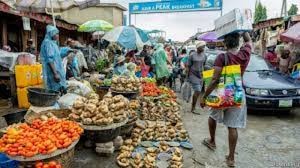
Higher transportation costs are driving up food prices in Abuja. Traders report increased expenses moving goods from rural areas, and vegetable seller Grace John says transport fees now dictate her prices.
She explained, “Previously, moving a basket of tomatoes from the farm cost about ₦8,000, but now it’s more than ₦15,000. Without raising my prices, I won’t earn any profit.”
A recent market survey reveals that prices of staple foods like rice, beans, garri, and vegetables have risen significantly in recent months. For example, a paint bucket of garri that cost around ₦1,200 earlier this year is now selling for up to ₦2,000 in some locations.
Saidah Kazeem, a food vendor in Utako, noted she has cut portion sizes and raised prices due to rising costs of ingredients, gas, and transport, despite customers’ complaints.
Small business owners are struggling. Restaurant operators who depend on fuel for cooking and supplies report shrinking margins.
Raji Rasaki was in Abeokuta, Ogun State, and reports that citizens are voicing frustration as rising fuel costs drive up food and transport prices. Many households now spend twice as much on commuting, traders are struggling with higher logistics costs, and citizens are calling for urgent government intervention to cushion the burden. The current reality has elicited strong reactions from cross-sections of the population.
A woman living in Sango, Ogun State, relied on selling chilled water in sachets and bottles as her only income. She had to abandon the business because she could no longer afford to fuel her generator, which powered her freezer, due to a lack of reliable electricity.
A trader in Ewekoro, Ogun State, expressed concern about the rising cost of transport, saying, “I’m very worried about this increase in fares. Today alone, I spent N3000 travelling from Abeokuta to Lagos, compared to the usual N1800. Providing food for my family has become a daily challenge.”
Several market traders interviewed by the NDR indicated that transporting goods from rural areas to urban centres has become more expensive than before. They expressed concerns regarding elevated food prices, decreased sales, and diminishing income.
A point-of-sales operator in Abeokuta shared an alarming experience about transport costs. According to him, “Most times, I now sleep in my little space where I run my business or rather trek part of the way home because transport fares have doubled.
A primary school teacher in Iyana Ipaja, Lagos, Mrs Ajibade, lamented how she now spends more on family since the costs of fuel have risen, saying, “I am now spending more on families despite less income. We can’t even feed normally again. In fact, the cost of commuting has become unaffordable, with transport fares more than doubling.”
Ajibola Osungbohun reports that Nnaimeka Dickson from Akwa, Anambra State, a public servant, said, “Fuel prices in Nigeria keep rising, but incomes remain the same. The real burden is not just the cost of fuel but the cost of survival.”
In the reactions, which he conducted via telephone, Wealth Frank, a product consultant from Kpansia, Bayelsa State, said, “My transport before was 100 naira from my house to the office; back and forth, it was 200. Now I’m paying 200 naira from my house to the office, back and forth, 400.”
Woko Jane Chisa, Edepie, a Yenagoa business owner: “It’s really affecting us workers in terms of transportation and household usage.” My transport was #900; now it’s #1,200.
Yusuf, a Kaduna State civil servant, said that it is causing hardship, leaving the road empty; there are not as many cars as before. He said he goes out with his car when necessary, and he mentioned that his children’s holiday makes him not use his car. He laments the prohibitive cost of living in the state, citing the effect on the just-concluded Salah celebration.
Mustafa Gambo-Muhammad, a journalist from Kano State, states that the increase in fuel prices across Nigeria is causing significant hardship. This increase affects transportation fares and the price of commodities, impacting all Nigerians regardless of their political class, profession, or business. He urged the government to urgently address this challenge.
Cynthia, a Bayelsa State corps member, used to spend #150 coming out from my street to the junction because it’s a short distance. But currently, the price is #200. In total, now, I spend #400 per day just for my street alone. Luckily for me, my workplace is just at the junction. Now, imagine people who still need to extend their journey further; they tend to spend more.
Oyo State Cushions Pain with Transportation Support Stipend
Olusola Oludiran reports that the Oyo State Governor Seyi Makinde’s announcement of a ₦10,000 monthly transport support fund for civil servants in response to rising petrol prices has generated mixed reactions among residents.
The Oyo State Governor announced a N10,000 transport allowance for workers to help offset the rise in petrol prices. This was confirmed by the state Chairman of the Nigeria Labour Congress, Kayode Martins, in a statement. “The newly approved allowance is set to take effect from April 2026, providing much-needed relief to workers grappling with rising transportation costs amid current economic challenges.
Although civil servants praised the development, conversations with residents suggested that those outside state employment would not benefit from the governor’s initiatives and would still face economic challenges largely driven by fuel costs.
Ibadan tricycle driver Mr Akolade Afolahan told the NDR, “I commend the governor, but he should understand that life is difficult for many residents.” He added that palliatives should be distributed to all to help lower living costs.
Ayorinde Favour, a civil servant and postgraduate student at the University of Ibadan, acknowledged the government’s efforts in her remarks. While she noted that her recent experiences have been challenging, she expressed optimism that the government intervention may offer some relief.
“As a government worker and full-time student living far from campus, I travel almost weekly and spend heavily on transportation and food. The recent petrol price hike has increased both costs, so I’ve been actively managing my expenses to avoid financial strain.
Meanwhile, I still commend the governor for trying to help us civil servants; the news makes me happy.”
Foluke Ayeni, a caterer in the state, complained that rising food prices are linked to increased transport costs for her work supplies. “Transportation costs have increased since the cost of fuel went high. Also, prices of certain things, food items, have gone up, e.g., a pure water bag in the UI is now four hundred from three hundred and fifty Naira. These are the ways it has affected me. Higher expenses on transportation and feeding. The governor must look at the non-civil servants as well ”.
Mr Pelumi Muritala, a tricycle rider, told NDR that despite the governor’s efforts, only the federal government can provide meaningful support for ordinary citizens facing high business costs.
The rising petrol prices are significantly impacting my Maruwa business. For instance, just yesterday, I purchased 25,000 litres of petrol, and the associated costs were considerable. While Bovas currently sells petrol at 1,325, customers remain unwilling to pay higher fares due to competition from those using gas-powered vehicles.
I need to pay my instalment of 77,350 tomorrow, but I only have 40,000. With petrol prices up, going from Gate to Adegbayi now costs 700, so people walk to Loyola for a N300 fare. The unions still collect their fees without considering rising fuel costs.



















Leave a Comment
You must be logged in to post a comment.