The House of Representatives Ad-hoc Committee probing Agricultural Subsidies, Intervention Funds, Aids and Grants Programmes from 2015 to 2025 has condemned what it described as the habitual disregard for parliamentary invitations by key government agencies and financial institutions. At an investigative hearing on Wednesday at the National Assembly Complex in Abuja, the panel expressed frustration
The House of Representatives Ad-hoc Committee probing Agricultural Subsidies, Intervention Funds, Aids and Grants Programmes from 2015 to 2025 has condemned what it described as the habitual disregard for parliamentary invitations by key government agencies and financial institutions.
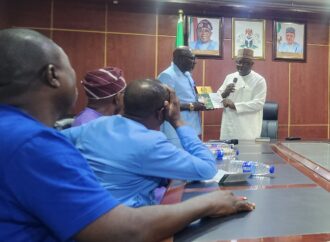
At an investigative hearing on Wednesday at the National Assembly Complex in Abuja, the panel expressed frustration over the repeated failure of several invited bodies to appear, warning that it would no longer tolerate such conduct.
Consequently, the committee directed NIRSAL Microfinance Bank, the Central Bank of Nigeria, SunTrust Bank, Stanbic IBTC Bank and the National Bureau of Statistics to present themselves without fail at its next sitting.
It cautioned that any further disobedience would compel it to invoke relevant sections of the 1999 Constitution to enforce their attendance.
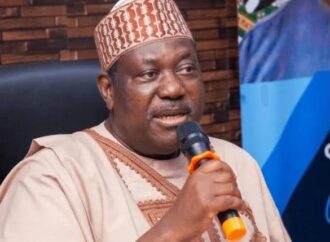
The directive was issued by the Committee Chairman, Jamo Aminu, following the continued absence of some institutions despite multiple summonses.
Aminu said, “It is disheartening that despite repeated invitations from the House of Representatives to government agencies, some have refused to appear or have outrightly ignored this investigative process.
“On this premise, I am constrained to move a motion to compel NIRSAL MFB, the Central Bank of Nigeria, SunTrust Bank, Stanbic IBTC Bank and the National Bureau of Statistics to appear before this committee.”
The panel is examining how major agricultural intervention initiatives were executed, including the Anchor Borrowers’ Programme, the Agribusiness/Small and Medium Enterprise Investment Scheme, the Accelerated Agricultural Development Scheme and the Nigerian Electricity Stabilisation Fund, among others.
While criticising the absence of some organisations, the committee also expressed dissatisfaction with the quality of submissions made by Jaiz Bank, Unity Bank and Access Bank. Although representatives from these banks attended the hearing, lawmakers said the information provided was incomplete and failed to meet the committee’s requirements.
As a result, the committee ordered that the chief executives or appropriate heads of all concerned institutions must appear in person. The affected banks were also instructed to resubmit detailed documents strictly in line with the committee’s guidelines.
“This committee will not accept half-truths, cosmetic compliance or administrative evasions,” the Chairman warned.
He added that any misleading or falsified records would attract penalties under Sections 88 and 89 of the 1999 Constitution (as amended).
Explaining the purpose of the investigation, Aminu said, “Our focus is not merely on how much was released, but how the funds were applied, who benefited, what was achieved, and what value accrued to the Nigerian people.”
He disclosed that the committee would carry out forensic audits and physical inspections of ministries, agencies, banks and project sites to verify claims and confirm the existence and impact of funded projects.
Earlier, the Deputy Chairman of the Committee, Sunday Umeha, said the probe was driven by public concern over the poor performance of agricultural intervention programmes.
“There can be no national security without food security,” he said, noting that despite massive government spending on agriculture over the last decade, food prices remain high and food insecurity persists.
“It is unacceptable that trillions of naira were committed to agriculture with little impact on food security, rural livelihoods and import dependence,” he added.
Umeha urged all invited institutions to submit relevant documents to assist the committee, warning that any organisation that ignores the summons would face legal action.
“No institution is above the law. No agency is immune from oversight,” he said.
The House of Representatives constituted the ad-hoc committee amid growing public doubts about the effectiveness, transparency and accountability of federally funded agricultural intervention schemes.
Between 2015 and 2025, successive administrations channelled huge sums through the Central Bank of Nigeria, deposit money banks and development finance institutions to boost food production, support smallholder farmers, cut imports and stabilise the economy.
However, surging food inflation, worsening food insecurity and continued reliance on imports have raised serious questions about how the funds were allocated and used.
The investigation will review compliance with programme rules, identify beneficiaries, trace project outcomes and recommend sanctions or policy changes where abuse, mismanagement or inefficiency is established.