The third day of May every year in the last 31 years marks International Press Freedom Day, a day dedicated to celebrating the fundamental principles of press freedom and defending the independence of media outlets worldwide. In an era where misinformation and censorship threaten the integrity of journalism, this day serves as a poignant reminder
The third day of May every year in the last 31 years marks International Press Freedom Day, a day dedicated to celebrating the fundamental principles of press freedom and defending the independence of media outlets worldwide. In an era where misinformation and censorship threaten the integrity of journalism, this day serves as a poignant reminder of the critical role that a free press plays in fostering democracy, accountability, and transparency.
Since its inception by the United Nations General Assembly in 1993, Press Freedom Day has served as a platform to raise awareness about the importance of free and independent media. This year’s theme, “A Press for the Planet: Journalism in the Face of the Environmental Crisis,” underscores the vital role that accurate and reliable information plays in empowering individuals, and societies, dialogue, and advancing social progress.
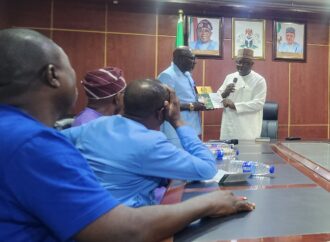
In Abuja, the nation’s capital, practitioners, media scholars, legal practitioners, Civil Society Organisations, lawmakers and Mass Communication students from the University of Abuja and Nile University, a private University in Abuja celebrated the day with speeches, goodwill messages, keynote address and panel discussion.
It was organized by the Centre for Journalism Innovation and Development and Konrad Adenauer Stiftung.
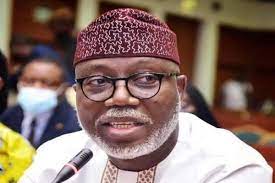
Hon. Akintunde Rotimi Jr, Chairman House Committee on Media and Public Affairs in his 12-page keynote address said World Press Freedom Day is a day of reflection among media professionals and stakeholders about issues of press freedom and professional ethics stressing that it provides an opportunity to celebrate the fundamental principles of press freedom; assess the state of press freedom throughout the world, defend the media from attacks on their independence and pay tribute to journalists who have lost their lives in the line of duty.
Hon. Rotimi reminded attendees that the 1999 Constitution of the Federal Republic of Nigeria (FRN) (as amended) confers on the press a critical role as contained in Section 22 regarding obligations of the mass media which states that: “The press, radio, television and other agencies of the mass media shall at all times be free to uphold the fundamental objectives in this chapter and uphold the responsibility and accountability of the government to the people”.
For him, amongst the many other challenges in the course of the discharge of this constitutional mandate, the Press faces a disproportionate exposure to harm in the face of widespread insecurity challenges in the country adding that there are also issues around the dearth of funding.
His words: “There is no gainsaying that there are many miles to cover as far as media freedoms in our country is concerned but the state of these freedoms has greatly improved from the days of military intervention in our body polity (particularly, 1983 – 1998).
” I, therefore, call on all stakeholders to continue concerted efforts to address these challenges but also go beyond to encourage introspection and self-regulation, to look at the self-defeating ways that the Press de – legitimises their struggle by not upholding ethics and addressing some of their own practitioners who abuse the limited freedoms that exist” he stressed.
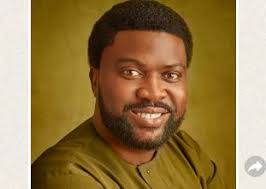 Hon Akin Rotimi
Speaking to this year’s theme , the federal lawmaker said it alludes to the critical role that journalists play in creating necessary awareness at a time the world is battling some of the worst impacts of climate change adding that Nigeria currently ranks as one of the most vulnerable countries to climate change as evident in the several challenges it faces including flooding, drought, food insecurity, erosion, extreme temperature, and even conflicts due to resource scarcity and struggle.
“Recently, particularly in February, the country experienced an intensive heat wave that left many asking the question: “Did God open hell’s gate and leave us to roast?” But no, the gates of hell were not opened by God, but perhaps, by humans whose activities have made heat waves 10 times more likely in places like Nigeria and other countries around the equator.
Hon. Rotimi lamented that the constant move of herders southwards in search of greener pastures, the drying up of Lake Chad, the struggle amongst kinsmen in oil producing communities, have all degenerated into tensions, maiming, killing and uncountable fatalities.
“Similarly, flooding which is exacerbated by climate change is one of the most devastating and frequently occurring natural hazards that Nigeria faces. The 2022 Nigeria floods affected many parts of the country. From the Federal Government Data, the floods displaced over 1.4 million people, killed over 603 people, and injured more than 2,400 people. About 82,035 houses were damaged, and 332,327 hectares of land had also been affected. While Nigeria typically experiences seasonal flooding, this flood was the worst in the country since the 2012 floods. Climate change has been implicated as the main cause”, he stressed.
Specifically, Hon. Rotimi said: “Indeed, the media has a huge role in this regard. These commitments must move from paper to action and it is within your purview to make that happen. The media must hold the legislature and executive accountable to deliver on their responsibilities. With proper engagements, dialogue, in-depth investigations and effective follow-ups the media can convene stakeholders, influence policy dialogues and demand that the right things are done in the best interest of people and the planet.
“It has become increasingly necessary for the media to play a more active role in the process of bringing about the much needed environmental awareness and consciousness which will ultimately lead to environmental and behavioural change. Thereby, leading to greater stakeholder consultations on possible solutions and reducing conflict possibilities.
Hon. Rotimi said media coverage of these issues can also influence policy change and lead to the inclusion of climate education as a curriculum in Nigerian schools adding:” That way, children become groomed as environmental champions at an early age further reducing the risks of climate-induced conflicts among the populace.
He counselled that to make environmental stewardship enticing for Nigerians, the media should also highlight foremost environmentalists who have been in the forefront of championing conservation. People like the late Ken Saro-Wiwa, Newton Jibunoh,Desmond Majekodunmi and Ajoke Muhammed .
He said these Nigerians have led great legacies and there is a need for more young people to walk in those shoes.
The media, he said, should move public discussion in that direction to birth young environmentalists that will carry on with the mandate.
According to Ms. Busola Ajibola, Deputy Director, Journalism, Centre for Journalism Innovation and Development (CJID) one of the panel discussants, there were 1145 attacks on journalists stressing that there are patterns of impunity in the attacks.
“Journalists protection and safety should be a national emergency if you want journalists to do the watchdog job ,then they (journalists) should be protected”, she said.
In her contribution, Ms. Mojirayo Ogunlana, Executive Director, Digicivic Initiative said press freedom is important in the life of Nigeria and:” if it is endangered, all of us are endangered “.
Dr. Maude Rabiu Gwadabe, Deputy Editor – in – Chief and Chairman, Editorial Board, Media Trust Limited said media regulators, particularly Nigerian Broadcasting Commission (NBC) should be made to be independent because even when NBC staff want to do their jobs professionally, NBC Act Says they can take instructions from political appointees of government.
According to Mr Lawal Habeeb Akorede, Publicity Secretary, Nigerian Bar Association NBA for every right, there must be control and the law controls it adding that one can be a journalist and be an ethical journalist.
In countries where press freedom is under siege, journalists are often silenced or forced into self-censorship, undermining the public’s right to access information and hold those in power accountable.
Moreover, the rise of digital authoritarianism and the spread of disinformation pose new challenges to press freedom in the digital age. Social media platforms, while providing unprecedented opportunities for global communication, have also become battlegrounds for misinformation and censorship, amplifying the need for robust legal frameworks and ethical standards to protect journalists and ensure the free flow of information.
On this International Press Freedom Day, it is imperative that governments, civil society organizations, and individuals reaffirm their commitment to defending the independence of the press and upholding the principles of freedom of expression. By supporting journalists, advocating for press freedom, and demanding accountability from those who seek to suppress dissenting voices, we can collectively safeguard democracy and promote a more just and equitable society for all.
As we celebrate Press Freedom Day, let us not forget the journalists who have sacrificed their lives in the pursuit of truth, and let us redouble our efforts to ensure that their voices are heard and their sacrifices are not in vain. In the words of UNESCO Director-General Audrey Azoulay:”A free press is essential for peace, justice, sustainable development, and human rights.” Let us stand together in defence of press freedom and the principles it represents.