
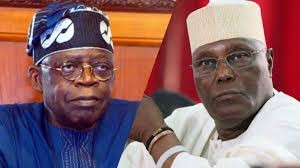
President Bola Tinubu’s proposal to obtain $6 billion in external loans has been approved by the National Assembly. It was approved by the Senate barely four hours after a formal request was received. However, former Vice President Atiku Abubakar has expressed concern, calling the borrowing worrisome. The president had written to the Senate and the
President Bola Tinubu’s proposal to obtain $6 billion in external loans has been approved by the National Assembly. It was approved by the Senate barely four hours after a formal request was received. However, former Vice President Atiku Abubakar has expressed concern, calling the borrowing worrisome.
The president had written to the Senate and the House of Representatives, respectively, on Tuesday, 31st March 2026, seeking their consent to borrow external loans from the United Arab Emirates and the United Kingdom.
President Tinubu sent two letters to Senate President Godswill Akpabio, formally requesting permission to borrow. These letters were read aloud during Tuesday’s plenary session.
In the first letter read by Senator Akpabio, President Tinubu requested the approval to establish a structured total return swap (TRS) external financing programme of up to $5 billion with First Abu Dhabi Bank of the United Arab Emirates.
“The purpose of this letter is to request the approval and resolution of the national assembly pursuant to the provisions of sections 21(1) and 27(1) of the Debt Management Office Establishment Act 2003 to establish a structured total return swap (TRS) derivative external financing programme from First Abu Dhabi Bank of the United Arab Emirates of up to $5 billion, which will be made available to the Federal Republic of Nigeria in tranches,” the letter read.
Tinubu stated that the funds would support budget execution, priority infrastructure development, and the repayment of costly domestic and foreign debts. He also mentioned that this facility would allow the federal government to address urgent financial needs when required.
The president said that Nigeria’s total public debt currently stands at $110.3 billion, equivalent to about N159.2 trillion as of December 31, 2025.
In the second letter, Tinubu also asked the Senate to approve the issuance of naira-denominated federal government securities as collateral for the facility and the payment of margining obligations in US dollars.
The president sought approval for a $1 billion UK export finance loan facility arranged by Citibank’s London branch and said that the loan would be used for the reconstruction and rehabilitation of the Lagos Port Complex and Tin Can Island Port.
The Senate approved the loans following the presentation and consideration of the report by Senator Aliyu Wamakko, APC, Sokoto North, chairman of the Senate Committee on Local and Foreign Debts.
The House of Representatives also approved the $6 billion external borrowing request submitted by Bola Tinubu, clearing the way for the federal government to access financing from lenders in the United Arab Emirates and the United Kingdom.
The two separate letters addressed to the Speaker, Abbas Tajudeen, were read during plenary on Tuesday. Following the presentation, Mr Tajudeen referred the requests to the House Committee on Aids, Loans and Debt Management for review.
The committee’s chairman, Abubakar Nalaraba, subsequently moved a motion for the report to be considered at the Committee of Supply.
After deliberation, the House adopted the committee’s recommendations and approved the president’s borrowing plan, paving the way for the federal government to proceed with the external financing arrangements.
Former Vice President Atiku Abubakar responded quickly, with his Senior Special Assistant on Public Communication, Phrank Shaibu, releasing a statement that called the situation both troubling and alarming.
He stated that a decision with major national impact, which could worsen the economy and affect future generations, should not be rushed. “What Nigerians have witnessed is not legislative diligence, but a disturbing erosion of oversight responsibility,” he said.
He emphasised that the National Assembly’s role is to safeguard the constitution by examining and defending the interests of Nigerians, rather than simply approving decisions without scrutiny.
“The Senate, which ought to serve as a constitutional safeguard, has instead reduced itself to a conveyor belt—processing requests of grave national consequence without due diligence. Borrowing decisions that will bind generations yet unborn cannot, and must not, be treated with this level of casual urgency.
“Where was the debate? Where was the rigorous analysis? Where was the accountability?” Atiku queried.
He warned that approving a multi-billion-dollar borrowing request in record time, without visible scrutiny, raised fundamental questions about due process and the commitment of the legislature to its constitutional duty.
Although these objectives seem ordinary, Atiku cautioned that they reveal underlying flaws in fiscal management.
“Resorting to fresh borrowing to service existing debts, plug budget gaps, and meet routine obligations is not a strategy—it is a dangerous cycle. It reflects a troubling absence of fiscal discipline, clear prioritisation, and sustainable economic planning,” he said.
He further anchored his concerns on emerging fiscal indicators, noting that between January and February 2026, the World Bank reported that Nigeria’s exposure to the International Development Association (IDA) had risen to $18.7 billion—placing the country among the largest recipients of concessional loans globally.
“In March 2026 alone, the President is requesting an additional $6 billion external loan, even as the Debt Management Office continues aggressive domestic borrowing through high-volume bond auctions, as evidenced by the March 2026 FGN Bond Offer Circular, largely to finance immediate government obligations and service existing debt,” he added.
According to Atiku, this pattern reflects an unsustainable borrowing trajectory that places the country on a dangerous fiscal path.
The former Vice President further questioned whether the development signals a deliberate attempt to mortgage the future of the country.











Leave a Comment
You must be logged in to post a comment.