Some multilateral election observer groups have picked loopholes in the ongoing electoral process, which is still at the collation stage though marred in controversies coming from opposition political parties.. Three of the international bodies, the Economic Community Of West Africans States (ECOWAS) Commission, The African Union (AU) and the National Democratic Institute and the International
Some multilateral election observer groups have picked loopholes in the ongoing electoral process, which is still at the collation stage though marred in controversies coming from opposition political parties..
Three of the international bodies, the Economic Community Of West Africans States (ECOWAS) Commission, The African Union (AU) and the National Democratic Institute and the International Republican Institute (NDI/IRI), in their separate preliminary observation issued 48 hours after the election, which covered the electioneering process in which they focused on both pre elections and elections day events.
In the ECOWAS Commission’s report, the international team of observers led by the former president of Republic of Sierra Leone, Baba Kamara noted that the 2023 elections were conducted as according to the INEC’s stipulations. However, the elections were marred by some inefficiencies by the electoral commission. “The late start of voting beyond the 08:30 AM opening time due to the late arrival of polling officials and voting materials and, in some cases, the delivery of wrong materials, at polling stations across the country. There were postponements of elections in some polling units in Lagos, Imo, Bayelsa, Rivers and Edo States, due to electoral violence or logistics challenges;
“The unavailability of sufficient quantities of electoral materials in many polling stations across the country. The visible presence of security agents discharging their duties in accordance with the provisions of the law; in some polling units, how- ever, they were inadequate; “most polling officials and ad-hoc staff demonstrated inadequate knowledge of their duties, especially with the voting materials”.
The ECOWAS Commission further highlighted issues observed during the process:
On electoral Campaigns, Security and the Media
“The Mission took note of the signing of two Peace Accords by all the political parties and their candidates, the first on 29th September 2022 and the second on 22nd February 2023, to enlist their commitment to the peaceful conduct of the 2023 general elections.
“The electoral campaigns took place in all the geopolitical zones in a peaceful and conducive atmosphere. The political parties and their can- didates actively carried out their campaigns and had the opportunity to disseminate their manifestos and programmes to the electorate. The main method of the campaign was through street rallies and town hall meetings based on an agreed schedule among the political parties and candidates. The Mission notes that security was provided for all the presidential candidates during the campaigns and throughout the electoral process.
“The Mission notes the high level of citizens’ mobilization, advocacy and sensitization carried out by Civil Society Organisations to promote a conducive environment for credible, inclusive and violence-free elections.
“The Mission also notes the vibrant media landscape animated by more than 300 newspapers, 108 magazines, 300 radio and 125 television stations spread across the country. The major radio and television stations with greater national reach are based in Abuja and Lagos.”
On the Incidents on Elections day
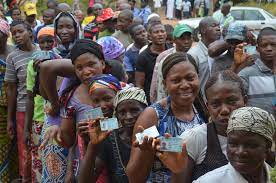
The Commision also noted the electoral violence which occurred on the elections day, stating that some thugs showed up at some voting points across the country which caused disruptions of the proces, and led to death of some of the victims, while some were injured.
“The processes on E-Day unfolded in a generally peaceful environ- ment. However, incidents of violence, killings and disruption were rec- orded in several States. The Mission deplores the unfortunate incidents that occurred in the lead-up to E-Day, leading to loss of life in some parts of the country. These include the murder of the Labour Party senatorial candidate for Enugu East senatorial district, alongside five of his sup- porters; and three persons who lost their lives in Kano in clashes be- tween supporters of two rival political parties, APC and NNPP.
“On E-Day, an attack perpetrated by Boko Haram insurgents in Gwoza Local Government Area of Borno State resulted in five persons injured. Similarly, there were reported attacks by bandits in Alawa, Shiroro Lo- cal Government Area of Niger State.
Violent incidents were likewise recorded in the Mafoluku area of Oshodi in Lagos State, where masked men, armed with Pump Action riffles disrupted voting and burnt ballot papers and boxes.
“There were also reported cases of ballot snatching and BVAS theft in some States, including Delta, Katsina and Anambra. Specifically, an in- cident was recorded in Oshimili Local Government Area of Delta State, where thugs attacked a polling unit and, in the process, fled with two BVAS machines. Similarly, In Safana LGA, Katsina State, thugs attacked a voting centre and snatched six BVAS machines.
“However, while few BVAS were recovered by the security forces, INEC’s contingency arrangements enabled the continuation of voting as stolen BVAS machines were replaced and security was reinforced in the areas affected. The Mission presents its sincere condolences to the families of the victims.
“The Mission notes the increasing misinformation and disinformation on social media, including misleading conjectures and projections re- garding the outcome of the 25th February 2023 general elections, liable to cause disaffection and inflame tensions in the polity. It urges the pub- lic to disregard the provocations and continue to rely on official pro- nouncements on the electoral process by INEC and other competent na- tional institutions.
“The observations detailed here-in cover events in the lead-up to E- Day and the voting process on E-Day. The ECOWAS Election Observation Mission will continue to observe the concluding phases of the electoral process; engage stakeholders where necessary, in line with its preven- tive diplomacy mandate, and make additional observations if needed.
“It shall, in due course, compile a comprehensive report of its findings, including best practices and shortcomings observed as well as incidents with precise Polling Unit locations and numbers to concerned stake- holders in the Nigerian electoral system for consolidation and remedial purposes. To that end, ECOWAS shall also engage the concerned stake- holders”.
Similarly, a preliminary report by the group of Observers from the African Union, led by the former President of the Republic of Kenya, Uhuru Muigai Kenyatta, noted some isolated violence and logistic impasse which affected the Independent National Electoral Commission (INEC) in its deployment of voting materials.
The AU observers, on the other hand, commended the INEC and Nigerians for keeping positive spirits to consolidate the democratic process in the country, despite the challenge of Naira scarcity and other issues which impacted the country’s economy.
“The electoral environment was generally peaceful despite isolated incidents of violence. The polls also took place against the backdrop of a cash crisis following the redesigning of the Naira currency. While a range of stakeholders acknowledged the positive spirit of the policy of Naira redesign, the Mission noted that the timing of its implementation impacted on the economy as well as the logistical operations of INEC, the campaign process, the
conduct of election observation, among others.
“Significant progressive reforms were a key feature of the 2023 general elections. Some of the reforms were as a result of recommendations made in previous AU observation missions. The Mission commends Nigeria’s continuous commitment to consolidate its democratic governance”.
The group acknowledged the impact of the reform of the Electoral 2022 in the country’s electoral process, insisting that “technological innovations such as the use of Bimodal Voter Accreditation System (BVAS), the INEC Results Viewing Portal (IREV), timely disbursement of funds to INEC and the power by INEC to review results. Other reforms included enhanced inclusion of special categories of the electorate which encouraged fair political competition and accountability in the electoral process. The Mission commends these positive developments which are aligned with Nigeria’s international, continental and regional obligations”
ON ELECTORAL SYSTEM AND INCLUSIVE PARTICIPATION
“The Mission commends INEC on the progressive measures taken to promote greater participation in the electoral process, including giving priority to the elderly, People with Disabilities, and other marginalised groups. The 2022 Electoral Act, for example, introduced a magnifying lens for the visually impaired, braille ballots for the blind, and specially
designed posters describing the voting process for the deaf.
“The Mission further notes that Sections 15 and 42 of the Nigerian Constitution guarantee equal rights for men and women in political, social and economic life. However, the First Past-the-Post electoral system does not seem to encourage affirmative action for women, youth and People with Disabilities. There was a notably very low number of candidates from these categories. For instance, there was only one female candidate at presidential level. Only 8.4% and 9.2% of candidates were female for the Senatorial and House of Representatives levels, respectively.
“In a different vein, the Mission notes that there are no legal provisions to allow for special voting for INEC staff and security personnel deployed to work away from their respective registered polling unit, on election day. This leaves over one million people disenfranchised.”
On Voter Education, Election Campaigns and Media Environment
“INEC registered 93,469,008 voters of which 47.5% were women. This marked an 11.3% increase from the 84,004,084 voters recorded in the 2019 general elections. The Mission applauds INEC’s decentralisation strategy for Permanent Voter Card (PVC) collection to the 8,809 Registration Areas/Wards. This special measure increased the PVC collection rate compared to 2019.
“The Mission noted that political parties contesting the general elections committed to a peaceful electoral process through signing peace accords. The campaign period was generally peaceful albeit with incidents of violence reported.
“The Mission noted that media played a key role in disseminating information aimed at promoting meaningful participation during elections. Both public and private media outlets enjoyed relative confidence and trust of stakeholders during the electoral period”.
On Security Environment
The elections took place amidst general insecurity in the Northwest, Northeast, Southeast, and South-South geopolitical zones. The Mission noted that security issues presented a challenge to the conduct of the elections, as noted with the attack on INEC offices, personnel and material before the elections.
“The Nigerian Police Force reported that it had mobilised about 310,973 personnel to provide security during the elections. The Mission took note of the complementary deployment of the Nigerian military and paramilitary across the Federation to avert threats of violence that could impact the peaceful conduct of elections.
On the role of Civil Society Organisation and Observers.
“The Mission commends the active role played by Civil Society including women and youth organisations, in championing advocacy for electoral reform, civic and voter education, peace initiatives and election observation.
“INEC accredited 196 citizen observer groups and 33 international organisations who collectively played a significant role in safeguarding the integrity of the electoral process. The Mission commends INEC for accrediting the largest contingent of election observers in the 2023 elections since Nigeria’s return to multiparty democracy.”
The AU observers also noted that voting and counting took place in an open and transparent atmosphere in the presence of observers, party agents and media.
The report also concluded that “the polling staff were generally competent in carrying out their duties and demonstrated a sense of commitment except in a few cases where some polling officers did not know how to effectively use the BVAS machine. In other cases, they were slow in operationalising the opening of polls. The Mission commends INEC for deploying women and youth as polling officials”.
in the same vein the International Republican Institute (IRI) and National Democratic Institute (NDI) led by Dr. Joyce Banda, former President of Malawi, in its preliminary statement, noted that reforms to the The Electoral Act 2022, the election fell well short of Nigerian citizens’ expectations.
The delegation observed that Logistical challenges and incidents of political violence overshadowed the electoral process and impeded a substantial number of voters from participating. Also, the ongoing currency and fuel shortages served as a burden to voters and election officials.
Despite the challenges posed to Nigerians, the delegation commended them for their resilience to demonstrate their commitment to the democracy in the country. They also lauded the efforts of the members of the National Youth Service Corps for their dedication to the democratic principle of the country.
The delegation noted that overcrowding in some polling places, late poll openings and logistical mishaps led to tensions and jeopardized the privacy of the vote, citing the challenge the INEC battled with the electronic transfer of results and their prompt upload to a public portal eroded voter confidence.
The Independent National Electoral Commission (INEC) was also criticized by the NDI/IRI delegates for poor communication, a lack of transparency on the inefficiency of the IRev to transmit the results.
The Observers group, therefore recommended that “INEC should develop realistic timelines and an operational framework that ensure timely opening of polling stations and even distribution of materials across polling units, targeting specific resources to areas with historic patterns of delayed openings.
“ INEC should distribute voters more equitably among polling units and consider adjusting the number of poll workers assigned to each polling unit based on registered voters to reduce the time spent waiting in queues and completing ballot sorting and counting processes. Poll workers should receive better and recurrent training to ensure that the election procedures are evenly applied across the country, including use of the BVAS.
“INEC should engage in proactive, regular and transparent communications and outreach to the Nigerian public and relevant stakeholders related to electoral developments, electoral delays, cancellations, etc, and make such information immediately available on its website.
“INEC should consider redesigning the voting cubicle to guarantee ballot secrecy and enhance accessibility to PWDs. Lawmakers and INEC should work together to ensure contingency funding that can inoculate against economic and other unanticipated crises.