


IPC Trains Journalists on Managing Difficult Assignments
Worried by the spate of increased attacks on journalists and other media professionals by state and non-state actors, the International Press Centre organized a workshop for journalists on how to be...

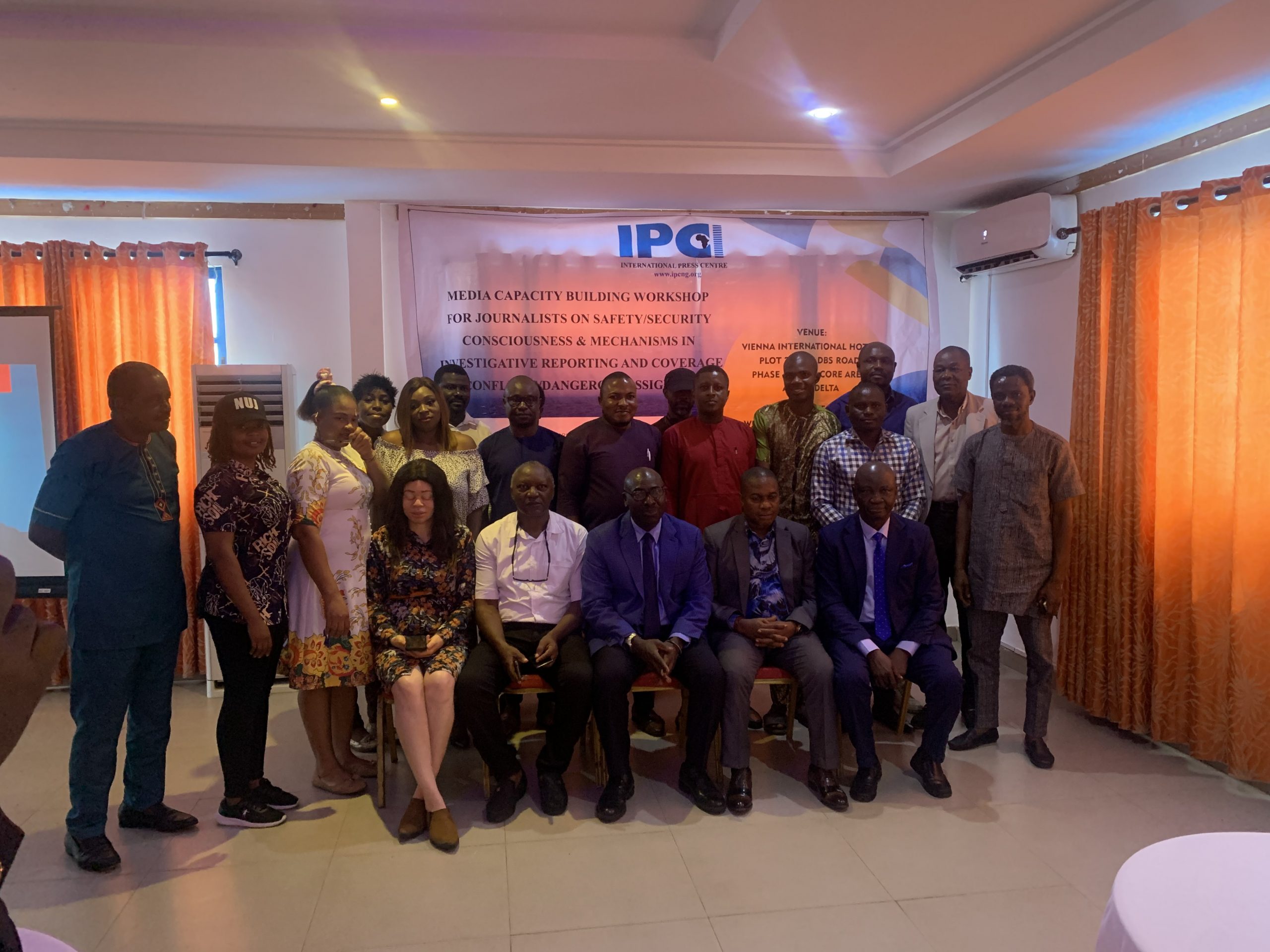
Worried by the spate of increased attacks on journalists and other media professionals by state and non-state actors, the International Press Centre organized a workshop for journalists on how to be safety conscious while covering conflicts or dangerous assignments.
 The two-day event which took place in Asaba, Delta State examined various means by which journalists could protect themselves from danger in the course of doing investigative reports and handling coverage of dangerous assignments including conflicts which may be dangerous and have negative consequences on their physical and mental well-being.
The workshop supported by Shehu Musa Yar’adua Foundation, Ford Foundation, Luminate and OSIWA had in attendance 26 male and female print, broadcast and Online journalists from Anambra, Delta and Edo States who were taken through sessions on entrenching ethics and professionalism, building safety and security consciousness and giving deserved attention to physical and mental health.
The training workshops had sessions on ‘Data and Digital Security & Related Security Issues in Investigative Reporting and Coverage of Dangerous Assignments’ handled by Mr Peter Nkanga an investigative journalist and press freedom advocate; while Dr. Majority Orji, Associate Professor of Mass Communication at Delta State University, Abraka handled a session on ‘Investigative Journalism or Reporting: Understanding the Challenges & Possible Dangers’; and Dr. Uzo Israel, a Clinical Psychologist took the journalists through a session on ‘Attacks on Journalists, Mental Health Challenges and the Imperative of Effective Management’. The Executive Director of IPC, Mr. Lanre Arogundade facilitated a session on ‘Stages/Phases of Conflicts, Roles of Journalists and Safety Challenges’.
The IPC Executive Director, Mr. Arogundade set the ball rolling stating that the training was expected to enhance the journalist’s capacity to manage difficult challenges while carrying out their assignments. “The conflict-sensitive journalist is always conscious of the need to reduce conflict and build the values of peace, as long as doing so does not compromise the duty to inform. The conflict-sensitive journalist’s responsibility is to ensure that tension is not allowed to spill into violence.
“The thrust of journalistic responsibility during the phases or stages of conflict is to know that the media has a major role to play in conflict management. The principle of conflict management is that all conflicts cannot necessarily be resolved, but learning how to manage conflicts can decrease the odds of non-productive escalation” said Mr. Arogundade.
Mr Peter Nkanga, who took participants through a session on Data and Digital Security & Related Security Issues in Investigative Reporting and Coverage of Dangerous Assignments’ geared participants on the need to be security conscious with their dealings both online and offline.
He defined cyberstalking as a crime involving the use of technology (the Internet, email, direct message, social media, websites, or other electronic/digital means) to stalk, harass, threaten, induce fear, scare, or basically make someone feel concerned about their safety. It is an invasion of a person’s right to privacy and manifests in repeated actions over time.
Similarly, Mr. Nkanga said “since Nigeria’s Cybercrime Act was voted into law in May 2015 authorities have used the accusation of cyber stalking to harass and press charges against Nigerian citizens (journalists, bloggers, activists, etc) who criticize politicians and businessmen online and through social media.
Cyber stalking, which falls under Section 24 of the act, carries a fine of up to 7 million Naira and a maximum three-year jail term for anyone convicted of knowingly sending an online message for the purpose of causing annoyance, inconvenience danger, obstruction, insult, injury, criminal intimidation, enmity, hatred, ill will or needless anxiety to another.”
“Freedom of expression and the press is guaranteed under Section 39 of Nigeria’s constitution. But restrictive laws which allow for journalists and bloggers to be arrested for reporting critically on politicians and others violate that right. The law gives authorities extensive powers to hold personal data without corresponding liability. And there is no provision in the law to seek redress… This means a person’s personal data can be handed over to security operatives whereas there is no proper procedure of protecting that person’s rights. This is a serious concern in a country like Nigeria where justice is seldom served. He warned journalists to refrain from clicking applications or web links that are not secure and can destroy the devices and leak information.
Dr. Majority Oji an associate Professor of Mass Communication Delta State University, Abraka Delta State advised journalists to exercise great care in dealing with police, government investigators, and prosecutors. He further noted advised participants to avoid getting engaged with sources in a way that interferes with their ability to perform as a reporter.
Dr. Uzo Israel represented by Dr. Mr Moses Tingir outlined some challenges and common mental health issues that affect journalists. He advised participants to seek help and intervention from relevant health experts whenever they are exposed to physical danger or have challenges on their mental health particularly if they notice such symptoms as anxiety, persistent low mood, depression, phobia and suicidal thoughts.
He urged the participants to ensure they take the breathing exercise to ease themselves of any stress that could impede their physical and emotional wellbeing.