
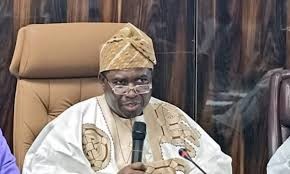
The Chairman of the Independent National Electoral Commission (INEC), Prof. Joash Amupitan, has assured Nigerians that the shortcomings witnessed in previous elections will be addressed ahead of the 2027 general elections. Amupitan gave the assurance on Saturday during a citizens’ town hall meeting on the Electoral Act 2026 held in Abuja. The event brought together government
The Chairman of the Independent National Electoral Commission (INEC), Prof. Joash Amupitan, has assured Nigerians that the shortcomings witnessed in previous elections will be addressed ahead of the 2027 general elections.
Amupitan gave the assurance on Saturday during a citizens’ town hall meeting on the Electoral Act 2026 held in Abuja. The event brought together government officials, INEC representatives, party chairmen, civil society organisations (CSOs), and members of the public to deliberate on recurring electoral challenges and ways to strengthen Nigeria’s democratic system.
The town hall, anchored by popular presenter Seun Okinbaloye and the Executive Director of Yiaga Africa, Samson Itodo, focused significantly on the technical glitches that marred the electronic transmission of results during the 2023 general election and the newly assented Electoral Act 2026.
INEC had faced criticism over its inability to upload polling unit results in real time to the INEC Result Viewing Portal (IReV) during the 2023 presidential poll. Addressing the concerns, Amupitan said the commission had eliminated the lapses responsible for the failure and would ensure they do not recur in 2027.
“Let me just appeal to Nigerians, because I have noticed now that what Nigerians desire is a perfect election. And INEC will strive as much as possible to give this country the best election.
“According to Abraham Lincoln, the ballot is more powerful than the bullets. This is why voters need to be aware and participate actively in the development of the country.
“So, that is why we cannot underscore the role of INEC, as well as the civil society, in guaranteeing a transparent and credible election,” he stated.
The INEC chairman described elections as central to democratic governance, stressing the importance of voter education and institutional transparency. He also disclosed that INEC played an active role in the process that led to the Electoral Act 2026, which began about three years ago through a joint committee made up of members of the National Assembly, civil society organisations, and INEC officials.
“During the revision of the electoral act, we constituted a committee composed of members of the National Assembly, CSOs and INEC officials. We talked about how transmission should be made mandatory.”
On the contentious issue of electronic transmission of results, which dominated debates after the 2023 elections. Amupitan said INEC pushed for mandatory transmission during legislative deliberations.
“Now, even talking about the transmission of the results, you will notice that the original provision that came out of the retreat from the National Assembly was not exactly what you have today.
“But when INEC came in, we talked of transmission being mandatory. But let us be sincere and honest. The only problem that we had was how to define what we call real time,” he stated.
Reflecting on the recent Federal Capital Territory (FCT) Area Council elections, Amupitan cited logistical and communication challenges as practical examples of difficulties confronting real-time transmission, particularly in remote areas.
“Let’s look at the FCT area council election that just took place. Now, there are six area councils in the FCT. The results came out on time in five area councils. But in the Kuje area council, we have 10 wards. And the results in one ward, Kabi, did not come until the following day, Sunday.
“They brought the results to Kuje town. And then it was collated along with the remaining nine wards before the result could be declared,” he explained.
He further recounted communication difficulties encountered by electoral officials in one ward.
“When we sent our polling officials and security agencies to that ward, the moment they entered that place, we could not reach them. They were not accessible by phone. And nobody could speak to them until we had to send somebody on Saturday morning, just to be sure that they were safe, before we got the results.”
Despite the delays, Amupitan maintained that transmission itself was not the core issue.
“I don’t see the issue of transmission as really a problem. I don’t see it as an issue because, from my little experience, over four months now in INEC, the problem is not even the network.
“So, talking about logistics, I’ve said it often that your election can be as good as your logistics. So, when there is a logistics failure, you know that you are beginning to fail.”
He admitted that the FCT poll experienced “some logistical issues,” including human errors, but said the commission was already addressing them.
“As a regulatory body, we’re determined to achieve all this. But nonetheless, we have to admit that there were some logistical issues. Some were purely human, which we are trying to address,” he added.
Expressing optimism about the 2027 general elections, Amupitan said increased voter awareness and public demand for accountability would contribute to improved outcomes.
“But I want to assure you that the election of 2027 will be the best election that Nigerians will have because Nigerians of 2023 are different from those of 2027. People are much more aware. And you know the correlation between elections and development.
“Nobody is happy about the classification of Nigeria as an underdeveloped country. So we want a situation where our process will be able to guarantee the confidence and the transparency that people want to see in their system.
“So, by the time you have a transparent election, and people begin to trust INEC and trust their leaders, then the country will move forward,” he stated.
Nigeria Requires Reliable Technology for Effective Election Transmission
Former INEC Commissioner Okechukwu Ibeanu also highlighted existing gaps in the electoral framework.
“I think there are still gaps and loopholes in the law, and, unfortunately, it took us debating about a provision for the country to come to a consensus that electronic transmission was actually in the 2022 Act.
“But what we have done is actually to take us far back to 2018. We consistently tinker with the electoral legal framework as if that holds all the answers to our electoral problems,” Ibeanu cautioned.
He urged citizens to enforce their watchdog duties by being vigilant and actively protecting their votes.
“Citizens, this is about you. It is not about politicians; it is not about INEC. Except citizens are in a position to protect their votes and control those who ostensibly represent them, our dream of a truly democratic country will remain an illusion,” he added.
Chidi Nwafor, a former director of information and communication technology at INEC, stressed the roles of security agencies and the judiciary in maintaining the sanctity of elections.
Similarly, the National Chairman of the Nigerian Institute of ICT, Engr Oluwadara Oluwalana, said telecommunication companies could collaborate on election day to improve transmission in 2027.
CSOs Task INEC on Electoral Transparency and Accountability.
Former Minister of Education, Dr Oby Ezekwesili, linked low voter turnout to a lack of trust in the electoral system.
“In all phases, you cannot have a democracy where a few people are voting. The reason for low participation is that the electoral empire is not trusted. We have seen what will happen in the 2027 election in the FCT election, where people were looking for their names. We need to audit the 2026 FCT election ahead of the future elections.”
The Executive Director of the International Press Centre, Mr Lanre Arogundade, highlighted the media’s responsibility in strengthening democratic processes.
“The media need to hold the political parties accountable because they get away with a lot of things. While the media is carrying out its responsibilities, it should not be subjected to humiliation. Our security officers should not work against the media during the discharge of their duties.”
Meanwhile, the executive director of Enough-is-Enough, Mrs Opeyemi Adamolekun, charged INEC with ensuring real-time electoral transparency.
Mrs Adamolekun asked the chairman of the House of Representatives Committee on Electoral Matters, Hon. Adebayo Balogun, whether the new electoral bill was accessible to the public.
The chairman, Hon Balogun, responded that members of the public would have to apply before it could be granted.
The Founder of The Albino Foundation, Jake Epelle, called for greater inclusivity, particularly for persons with disabilities (PWDs).
“Over time, the INEC has promised us on PWDs, and there were improvements, but there isn’t inclusivity in the election. We represent a large number in the country’s population, yet we are not given seats or included in the democratic system.
“We have equal rights to vote and be voted for. Our people shouldn’t only participate, but they should be involved.” Mr Epelle added.










Leave a Comment
You must be logged in to post a comment.