
How Far Can the ADC Go in the 2027 General Elections?
Prominent opposition leaders have adopted the African Democratic Congress (ADC) to challenge the ruling All Progressives Congress (APC) and President Bola Tinubu’s re-election bid, sparking...


Prominent opposition leaders have adopted the African Democratic Congress (ADC) to challenge the ruling All Progressives Congress (APC) and President Bola Tinubu’s re-election bid, sparking widespread debate among Nigerians as they look forward to the 2027 general elections. But how formidable is this opposition platform?
Early 2025 saw quiet talks among opposition leaders and discontented APC members rapidly turn into a major shift in Nigeria’s political scene, potentially challenging the ruling party in the 2027 general election.
On Wednesday, prominent politicians from various opposition parties and some discontented APC members gathered at the Yar’Adua Centre in Abuja for a media conference to announce their adoption of the ADC as the new political platform for the long-expected opposition party.
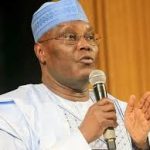
Attendees included former Vice President Atiku Abubakar, 2023 Labour Party presidential candidate Peter Obi, ex-Kaduna governor Nasir el-Rufai, former Senate President David Mark, former Osun governor Rauf Aregbesola, and ex-senator Dino Melaye.
Also present were former Minister Solomon Dalung, media personality Dele Momodu, ex-Senator Gabriel Suswam, serving LP Senator Ireti Kingibe, and former Rivers State Governor Rotimi Amaechi, among others.
Before the gathering at the Yar’Adua Centre, the ADC had already announced the change in its leadership, as its national officers, including its national chairman, Ralph Nwosu, resigned their positions to allow Senator David Mark to be the interim chairman of the party. At the same time, Ogbeni Rauf Aregbesola, a former ally of President Tinubu before their relationship became sour, was elected as the interim national secretary, and the former Minister of Youth and Sports, Bolaji Abdullahi, as the party spokesperson.
Formed by prominent political figures from various regions across the country, the coalition has been recognised by certain analysts as offering a broader national perspective than sectional parties, thereby enhancing its appeal to the electorate.
The coalition includes prominent figures like Atiku Abubakar and Peter Obi, along with other political heavyweights During a meeting of political leaders, Senator David Mark, interim chairman of the ADC, stated that the new opposition party brings together leaders from various political parties to address issues such as insecurity, economic challenges, and governance concerns present under the current administration.
The briefing after the meeting focused on the coalition’s formation and its goals to unify the opposition and challenge the ruling All Progressives Congress (APC) in the next election. Senator David Mark, the new interim chairman, emphasised the coalition’s mission to “rescue Nigeria, rebuild Nigeria, and return power to the people”.
“This coalition is determined to offer Nigerians a path to security, prosperity, peace and progress. Coming from various party affiliations, we are united in our resolve to present a constructive alternative to the hardship, insecurity and waste that has become the hallmark of the current APC government,” he said.
“We have never seen a government so much at home with corruption, a government that disdains accountability in all ramifications. A government more concerned with the next election rather than the survival of the ordinary Nigerians. A government so totally consumed with politicking that governance is abandoned, while the majority of our people wallow in hunger and poverty,” he said convincingly.
Coalitions among political parties are common in Nigeria’s political system. In the first republic, such alliances appeared, and more recently, the ruling APC was formed by merging three major opposition parties—ACN, CPC, ANPP—and a faction of APGA.
However, the current nature of the merger differs from previous mergers. Unlike past mergers where political parties collapsed their structures and identity into a single entity, this merger allows them to remain in their respective parties while working towards a shared objective: unseating Tinubu in 2027.
Suspected Roadblocks Ahead for the Coalition
The joining of these prominent politicians to the party raises doubts about their ability and willingness to put aside personal ambitions to keep the party united and competitive against the ruling party.
Although the coalition’s formation initially progressed smoothly, the group’s stability may face challenges in the future because some members have not yet formally resigned from their previous political parties, resulting in an uncertain status within the new coalition.
Mr. Festus Keyamo, the Minister of Aviation and former spokesperson for President Bola Tinubu’s 2023 general election campaign team, addressed the recent development on Wednesday via a tweet, raising a related question to the new coalition members.
Mr Keyamo, an active member of the ruling party APC and a senior lawyer, raised questions about the legality of the new alliance. He stated that the declaration by prominent politicians in the coalition for ADC signified a departure from their previous political affiliations.
“By law, you cannot operate from, or belong to, two or multiple political parties, so it is safe to say that their open declaration for ADC today is a clear abandonment of their previous parties. Belonging to two political parties is a ground for disqualification in an election.
“Therefore, the emergence of the ADC as presently constituted marks the formal dismemberment of the PDP, hitherto Nigeria’s strongest opposition party. The majority of the old guard in the PDP (who have lost control of the party) have been pushed out of the party by the younger Turks within the PDP.
“That is why the gathering today was a conglomerate of ‘former this’ and ‘former that’ of the PDP. No matter how you look at it, this is just Atiku’s faction of the PDP in desperate search for the 2027 presidential ticket—nothing more, nothing less”, he stated.
Who Leads the Coalition as Presidential Candidate in 2027?
The coalition faces the challenge of choosing candidates to oppose President Bola Tinubu in 2027. In the last election, Atiku Abubakar and Peter Obi lost, though they might have won if they had run together under one party.
President Tinubu received 8,794,726 votes (36.61%), Atiku received 6,984,520 votes (29.07%), and Obi received 6,101,533 votes (25.40%). Although these numbers indicate a potential for a combined victory if they were to collaborate, current indications suggest that both candidates intend to pursue their ambitions.
Having been on the ballot paper since 2007 for the highest political office in the country with no luck, Atiku still believes in his charm of luck to be the next president in 2027, which is why he has been at the forefront of an opposition coalition to oust the current administration.
Peter Obi, on the other hand, has also reiterated his stance and ambition on different occasions that he would not step down for any politician in 2027. Also, the influence of his supporters, also known as the ‘Obidients’ movement, is an added advantage for him to build his ambition to become president.
Former Kaduna State Governor Mallam Nasir El-Rufai recently joined the Social Democratic Party (SDP) and is reportedly considering a 2027 presidential run.
In addition to the three individuals, Mr Rotimi Amaechi, a 2022 APC presidential aspirant, reportedly still harbours his earlier ambitions.
The selection of the next presidential and vice presidential candidates to run against the APC is an important factor for the coalition’s long-term viability, considering the interests of the significant individuals involved.
The Fermenting Internal Legal Crisis in ADC
While the merger was happening yesterday, another faction of the ADC has openly kicked against the move by the opposition to adopt the party as its political platform, stating that the party was hijacked by the political elites without consulting all key structures in the party.
Musa Isa Matara, national publicity secretary for the faction, stated in his response to the opposition coalition that the previous national leaders of the party should have quit because their actions conflicted with their stance.
“We warn those coming into the ADC as part of this imposed arrangement to tread carefully. Be mindful that a few individuals are attempting to sell out the soul of our party for personal gain,” the statement said.
“The ADC is not for sale. It belongs to its members, not political merchants or elite dealmakers.”
Although these challenges are important factors influencing the prospects of the new coalition, the political strategy and decisions of the ruling party will likewise be instrumental in determining whether it emerges as a strong contender in the 2027 political landscape.