
The debate over the 2026 Electoral Act, since its hurried approval by President Tinubu in February, has continued unabated. On Thursday, a former Resident Electoral Commissioner, Mike Igini, added his voice by describing the legislation as “a tragedy” and a major regression capable of undermining credible elections in the country. President Tinubu, on Friday at
The debate over the 2026 Electoral Act, since its hurried approval by President Tinubu in February, has continued unabated. On Thursday, a former Resident Electoral Commissioner, Mike Igini, added his voice by describing the legislation as “a tragedy” and a major regression capable of undermining credible elections in the country.
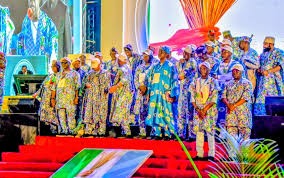
President Tinubu, on Friday at the APC convention, while welcoming criticism, noted that the constant attacks by opposition groups on the Electoral Act 2026 are a disservice to the Nigerian people. “It is public knowledge that the processes leading to the amendment of the 2022 Electoral Act passed through the crucible of legislative scrutiny, including public hearings. The Electoral Act was passed by the National Assembly, elected by the Nigerian people in accordance with the 1999 Constitution ”.
The Inter-Party Advisory Council (IPAC) rejected the amended Act, describing it as “regressive” and “exclusionary”. One objectionable clause of the Act that was objected to is that of mandatory direct primaries: parties rejected the abolition of indirect primaries, arguing that candidate selection is an internal party affair.
The ruling APC party sees nothing wrong in this clause and has gone ahead to adopt it in the conduct of its national convention, employing the consensus arrangement by simple affirmation.
Another area of discordant tunes is the NIN requirement: the requirement to submit membership registers, including National Identification Numbers (NIN), by April 2026 was criticised as “impractical” and a risk to voter inclusion.
Electronic Transmission: Most political parties want the mandatory real-time electronic transmission of results to the IReV portal, which they claim the new Act weakened.
Mike Igini emphasised the need to urgently address what he described as a “tragedy” linked to the Act before the 2027 general elections. He cautioned that, if unresolved, these problems could prevent Nigerians from having a say in choosing their leaders.
Speaking at the second annual lecture of the Alumni Association of the National Institute for Security Studies in his paper, “Credible Elections and National Security in Nigeria”, Igini stressed that Nigeria’s progress and overall quality of life would significantly improve if the country succeeds in fixing its electoral process and system.
He highlighted INEC, the judiciary, and security agencies as key to credible elections, emphasising the need to strengthen and align their roles.
In his perspective, the Chairman of INEC, Prof. Joash Amupitan, said Nigeria must move past the notion that elections and security are parallel tracks. They are, in fact, two sides of the same coin of national stability. While the Constitution of the Federal Republic of Nigeria 1999 (as amended), the Electoral Act 2026, and INEC Regulations provide the legal framework of our democracy, it is the security architecture that provides the enabling environment for those laws to breathe. Without a secure environment, the sovereign will of the people is not just threatened; it is silenced.
Igini noted that ‘legitimacy, as highlighted by the chairman, is critical. Democracy is about governance by the people, of the people, and for the people. He argued that the 2022 Electoral Act had been widely regarded as one of Nigeria’s most progressive electoral frameworks but warned that recent changes risk weakening public confidence in the system. “The 2022 Electoral Act represents the most progressive piece of electoral legislation in our history. Regrettably, that has been watered down,” he said.
He argued that the 2026 amendment had weakened the gains recorded under the 2022 Electoral Act, which he described as one of the most progressive electoral frameworks in Nigeria’s history.
“The first question to ask about any election is the legal framework guiding it. The sanctity of the law is critical to election management. Once public perception is compromised, the process is already in danger,” he added.
Igini stressed that the legal framework governing elections plays a decisive role in determining their credibility, particularly at the pre-election stage. He warned that negative perceptions of neutrality among electoral stakeholders could erode trust in the process. “Public confidence in elected officials—believing that they hold office based on free and fair elections—is essential. It is this authorisation by the people that enables accountability. Without credible elections, democracy cannot thrive.
He also raised concerns over what he described as the increasing role of the judiciary in deciding election outcomes, arguing that results should be determined at polling units rather than in courtrooms. “The winner of the election must be determined finally and conclusively at the polling unit and not in the court of law,” he added.
“Democracy is a complex, participatory process. It requires the active involvement of citizens and the structured participation of institutions. For instance, under Chapter 2 of our Constitution, the fundamental objectives and principles of state policy reflect the people’s sovereignty.
“Citizens delegate authority to representatives to govern public affairs, but this delegation is conditional upon accountability, oversight, and regular, predictable elections.
“These elections must be transparent, credible, and inclusive to maintain the legitimacy of governance. Political parties are indispensable to democracy.”
He also called on security agencies to act consultatively and impartially, as well as ensuring that no candidate or party is unfairly prevented from organising rallies or accessing public venues.
“Without political parties, democratic governance becomes practically inconceivable. Similarly, in Nigeria, the Constitution clearly defines eligibility criteria for elections, the role of political parties, and the processes by which candidates may contest.
Sections 65, 131, and 177 specify the requirements for different offices and highlight that all candidates need to be nominated by political parties.
Law enforcement and security agencies also have a crucial role. “Their responsibility is to create an enabling environment where citizens can exercise their electoral rights safely and freely. This includes protecting public institutions such as civic centres, stadia, and media outlets, which belong to the people.
“Security agencies must act consultatively and impartially, ensuring that no candidate or party is unfairly prevented from organising rallies or accessing public venues.
In his remarks at the occasion, the INEC Chairman noted that credible elections are the bedrock of democracy, and indeed, they serve as a litmus test for the strength and resilience of our national security architecture. The interplay between election integrity and national security is profound; one sustains the other. To have a peaceful, secure, and prosperous nation, the credibility of our elections cannot be compromised.
“In Nigeria, our electoral system has faced numerous challenges over the years, ranging from malpractices to threats of violence and vote trading that undermine the confidence of the electorate. These challenges not only affect the outcome of elections but also pose significant risks to our national security. Thus, we must address these concerns with utmost seriousness and resolve.
“We must recognise that credible elections foster public trust in governance, and this trust is crucial for national security. When citizens believe in the electoral process, they are more likely to accept the outcomes, reducing the tensions that can lead to unrest. Therefore, it is incumbent upon us as stakeholders—INEC, security agencies, civil society, and the electorate—to collaborate in fortifying the systems that underpin our elections.
“Under my leadership, the Commission’s approach is anchored on the supremacy of the Constitution and the Electoral Act. We are currently navigating a new statutory frontier where adjustments to timelines demand earlier and more rigorous security deployments. We are not merely watching the law; we are enforcing its technical safeguards—specifically the Bimodal Voter Accreditation System (BVAS) and the INEC Result Viewing Portal (IReV)—as the ultimate defence against electoral fraud ”.
In his remarks, the president of the Alumni Association of the National Institute for Security Studies, Mike Ejiofor, said credible elections are central to national security and democratic stability.
Ejiofor warned that flawed electoral processes often lead to public discontent, instability and violence, noting that the lecture was convened to foster dialogue and generate ideas aimed at strengthening democracy and sustaining national peace.
















Leave a Comment
You must be logged in to post a comment.