Women’s Day: IPC Board Panelists Discuss Role of Media in Breaking Gender Bias
To mark this year’s International Women’s Day, two female members of the Board of International Press Center, Lagos, – Victoria Ibanga and Funke Treasure Durodola- together with Executive...


To mark this year’s International Women’s Day, two female members of the Board of International Press Center, Lagos, – Victoria Ibanga and Funke Treasure Durodola- together with Executive Director Lanre Arogundade had a Twitter engagement on the theme: Role of Media in Breaking Gender Bias. Below are the major highlights of their engagement while responding to issues on the subject matter
How real are biases against women?
Victoria Ibanga
Biases against women are as real as the word “real,” and they come in different colours, sizes, and shapes. Biases against women happen everywhere – at work, at home and society at large. Everywhere you turn, there’s evidence of bias against either a woman or a girl. In some African countries, biases against the girl child and the mother start from birth. Many people in some countries of the world have deep-seated cultural preference for sons over daughters. Several cases abound where male children are preferred to daughters for wimpish reasons such as protection of the family line or family name. Which therefore explains why women who repeatedly give birth to girls are abandoned at hospitals by their spouses.
Again, in some cultures, it’s believed that women would be part of their husbands’ family once they are married. It therefore means that it is the boys that would bear the family name in future. Today, technology has assisted couples to do the sex selection without qualms. Culling of females is becoming rampant or prevalent worldwide.
At work, biases manifest in the structure of the organisation, processes, and practices. Women are also discriminated against as they occupy lowest positions at companies, organisations and institutions and they are hardly at the decision making levels. The biases are noticeable in hiring, training, and promotion of women. They are denied a voice in key decision-making processes.
Putting it mildly, almost everyone is biased against women. The findings of Gender Social Norms Index, released by the United Nations Development Programme (UNDP) in 2020 confirm this assertion. The report says that almost 90% of men/women globally are biased against women. Period.
Funke Treasure Durodola
The biases against women have never been more in your face as we have seen it in recent times. There seem to be a string of incidences re-inforcing the biases in Nigeria lately. In February this year, a court ruled in favour of the IGP that the status should remain that a single unmarried woman in the police force should not get pregnant or attempt to marry. The opposite is allowed for single, unmarried males in the Nigeria police. They can marry, and impregnate women as they like. Also in the armed forces, we saw how a female soldier was court marshalled for saying yes to a youth corps member who proposed to her. Look at what is happening at the highest legislative body in Nigeria presently, 5 gender bills were rejected of the 68 bills presented. It was an overwhelming bias against the Nigerian woman in all fronts. Look at how Yewande Sadiku was hounded in public office, she is not the only one, if we begin to recount these incidences, we would see how it has become a culture of sort for women in public service to be continually shamed for their principled stand on transparency and accountability. There are increased occurrences of the demonization of women public office holders. In Nigeria today, condoms are distributed free, while sanitary pads which is used out of choice but compulsion.
Lanre Arogundade
The biases are real; and they are not just against adult women but also the girl-child in schools who is sometimes bullied by the boys. And we refer to the young girls who are lucky to make it to the schools. There are many girls of school age who are out of school due to poverty, wars, internal displacement by bandits and terrorists, diseases, forced early marriages, etc.
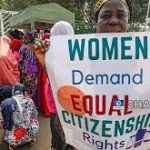
For the women in general the strongest evidence of bias lies in their exclusion from decision making processes especially through elections. That is why today fewer and fewer women are being elected into the Executive and legislative arms of government at all levels of governance. Unfortunately, proposed amendments to the Constitution that could have helped to redress the situation were turned down with some of the male legislators that voted against them smiling and patting themselves on the back as if they’ve conquered their enemies.
How do these biases affect women?
Victoria Ibanga
Oh, well, it’s better imagined than experienced. Some workplace policies are not women-friendly. Imagine a situation where women are paid less for equal work done or not promoted for donkey years as their male counterparts such practices are bound to affect them psychologically, physically and mentally. These factors will eventually lead to higher levels of stress, anxiety, and depression. These are likely to have a significant impact on the mental and physical health of women.
Funke Treasure Durodola
Women constitute half the population of the Nigeria; the gender biases deny effective, productive women the opportunity to contribute their quota to the growth and development of this country. For a linguistically diverse and multi ethnic nation like Nigeria, these biases further divide us. These biases stifle productivity, where a woman is the most qualified in an office, she would be denied a promotion based on her indigeneity status, this is anti-human rights. They inhibit growth and kill the desire to aspire for the top in public and private sectors. They deny the nation of outstanding performance, because the system in skewed against them on all fronts. The biases attack the self -esteem of our women and their confidence to compete for elective positions.
Lanre Arogundade
The biases do not allow women to realise their potentials to make positive difference in leadership and governance because major fallout is discrimination. Gender inequality therefore exists. But it is not only women that are affected but the society as a whole as citizens are denied the expertise of women in different areas of national endeavour.
Why is it that these biases reflect in media reporting of governance and development issues?
Lanre Arogundade
The media largely mirrors or reflects the society. If we must tell the truth, the biases we see out there also exist in the newsrooms. Thus, although we’ve invested so much in trainings and other forms of capacity building, media reporting of governance and development issues is still skewed in favour of men, an unwelcome phenomenon that usually plays out during elections. The critical issue is that enough voices and space are not being given to women and these need to be urgently addressed.
The missing factor across newsrooms is the lack of consciousness to understand that one of the major elements of good journalism is the reflection of the gender diversity of the society as recognised by such self-regulatory frameworks as the Nigerian Media Code of Election Coverage published in 2018 by the International Press Centre through the implementation of Component 4b: Support to Media of the European Union Support to Democratic Governance in Nigeria (EU-SDGN) project. The code, endorsed by all media umbrella professional organisations and over 200 media institutions, says it is the social responsibility of journalists and media outlets to consciously reflect the issues and views of women in election coverage and reportage in addition to stipulating that they should be accorded equitable access when compared with men.
Victoria Ibanga
The media organisations are run by human beings (men) who are part and parcel of the biased society. In other words, the media are a reflection of the larger society. Whatever affects the society will affect the media. Considering these factors, media biases will occur in the reporting of events, and selection of what should be covered. The implication is that it contravenes the standards of journalism.
Funke Treasure Durodola
Well, even in the composition of newsrooms, more men report political beats while women traditionally report health, fashion and women. If we did a simple content analysis of any Nigerian newspaper and consider the stories about male politicians and those of the females, it is unapologetically skewed against the women, there is no balance whatsoever.
Within political parties, men reserve the position of the women leader for women, even that had been contested recently. Men dominate the political arena and are perpetually unfriendly and unforgiving when women are prominent. They always find a way to disgrace them out of office, as if to punish them for daring to hold such positions.
Women politicians and political leaders are under reported and their accomplishments are not given the same prominence that the men get. Women politicians given visibility and prominence through interviews and opportunists to influence views and perspectives are painfully inadequate, almost non-existent. The media, inadvertently, fan the embers of tokenism in governance and development space.
Despite being part of the biases against women, what specific roles do you think the media can play in reversing the trend?
Funke Treasure Durodola
I am an active participant and collaborator in the Occupy NASS protests to reverse the unfortunate and sad development. I think what the NASS did was a betrayal of the collaborative efforts of Nigerian women in building this nation.
Women leaders lobbied extensively for the bills to be passed, yet our legislators callously rejected those bills. It is certainly not in the best interest of the nation.
As we celebrate the International Women’s Day 2022 with the hashtag #breakthebias, both private and public organisations should review their team structure and the composition of their management, and advisory boards to better reflect equitable representation of the both genders.
There are gender based exploitation in many offices, organisations should endeavor to have sexual harassment policies that should be enforced.
To end all forms of discrimination against the female gender, governments at all levels should consider women’s biological constitution in the office environment. There should be menstrual leave for women who struggle with pain, heavy flow, and mental cum emotional distress during their periods. As the Convener of the Sanitary Pad Media Campaign, I use the opportunity of a day like this to ask government at all tiers to consider providing free sanitary pads for school aged girls in Nigeria, especially at the junior secondary school level.
Lanre Arogundade
The media should lead by example by promoting the rights of women in the newsrooms; and the media should be inclusive in its reporting of social, economic and political issues. Nigerian women have excelled in all fields of human endeavour and the media should use them more as expert sources. During elections, the media should give more access and space for female aspirants and candidates. Experience has shown that where women have the support of the media they stand better chances of getting elected. That is why we are very proud of the fact that out of about 120 women we trained under the EU-SDGN programme on the strategic use of the media prior to the 2019 elections, 12 were elected or reelected into the national and state legislatures. The 12 are holding key positions in their legislative houses and part of the task for the media is to highlight their accomplishments and challenges.
Victoria Ibanga
This question is critical just as the role of the media is. The media are the major culprits in biases against women. The media influence how women and men are viewed in the society. When it comes to media reportage, women are underrepresented in the mass media and even when they are represented, they are more often than not represented in stereotypical roles. The media portray women as domestic workers, sex objects, weak, dependent and less competent in leadership. Perhaps, it’s time for the media to reverse itself. This can be done through the promotion of gender equality in a patriarchal society like ours. As agents of change, the media can achieve this through a total change in media structure, policies and content by making a conscious effort to eliminate all forms of discrimination or biases against women. It is pertinent to note that a positive change in media perception of women can send the right message to the society about the way and manner women should be perceived. Media practitioners should begin to push women agenda to the front burner in such a way that can encourage gender balance.
Most of the bills seeking greater women inclusion in the political process were left out of the constitutional amendment by the National Assembly, what is the way forward after this?
Lanre Arogundade
The campaign should be sustained and if need be we could have one or two Acts enacted by the National Assembly to make them binding legislations in the absence of constitutional amendment.
Funke Treasure Durodola
One of the 68 bills passed by NASS last week was one of free primary education, I am surprised it hadn’t been this way a long time, yet happy that it has finally been passed as a law. Governments should back it up with providing safe spaces for girls who start menstruating in primary school free sanitary pads until the end of their basic primary education
Victoria Ibanga
It’s indeed so sad to note that we as a people still belong to the last century. The rejection of the five bills by the National Assembly remains a major setback for the advancement of our democracy. It means that the men who constitute the majority in the National Assembly have blurry vision when it comes to gender. They are unfortunately socially conditioned to see things in a certain way.
It’s high time they began to look at issues of utmost importance with gender lens.
Women should not give up. The time to unite and fight the monster is now. They should keep pushing until they take their rightful place in the country.