


NGE Hosts 4th Jakande Memorial Lecture, Urges Credible 2027 Elections
The fourth Lateef Jakande Memorial Lecture in Lagos brought together leading figures in Nigeria’s media industry and was graced by Lagos State Governor Babajide Sanwo-Olu. The event called for...

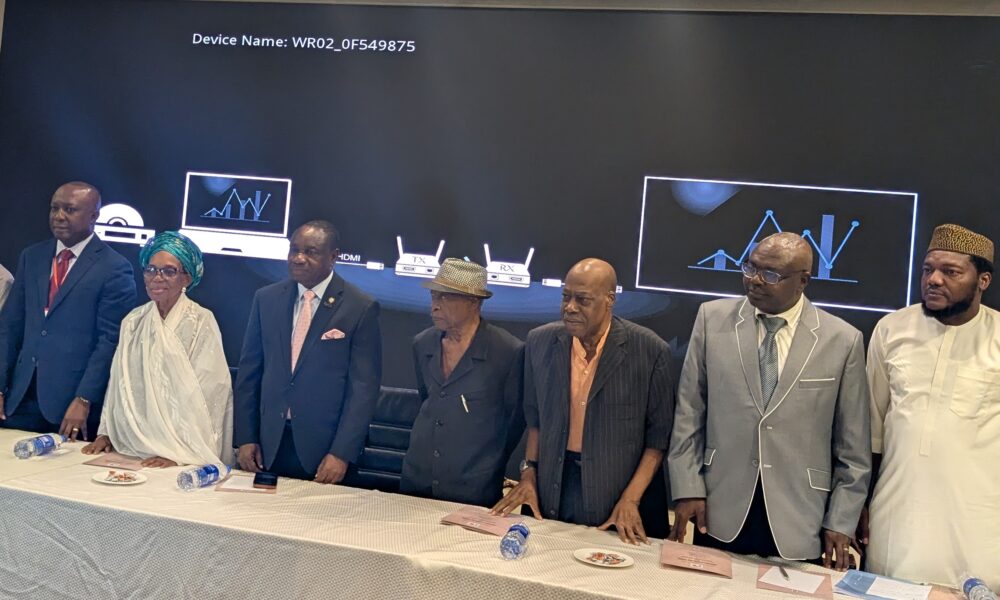
The fourth Lateef Jakande Memorial Lecture in Lagos brought together leading figures in Nigeria’s media industry and was graced by Lagos State Governor Babajide Sanwo-Olu. The event called for credible elections in 2027 and highlighted the media’s role in ensuring the polls meet Nigerians’ expectations.
The event, themed “The Media, INEC, Voters and Path to Credible Elections”, was held at the Sheraton Hotel in Lagos and attended by dignitaries, including Lagos State Commissioner for Information Mr Gbenga Omotosho, who represented the governor, and Professor Sylvester Akhaine of Lagos State University (LASU), the guest lecturer.
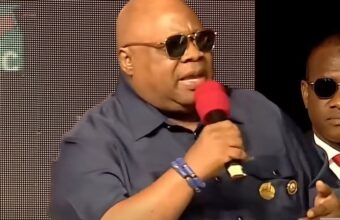
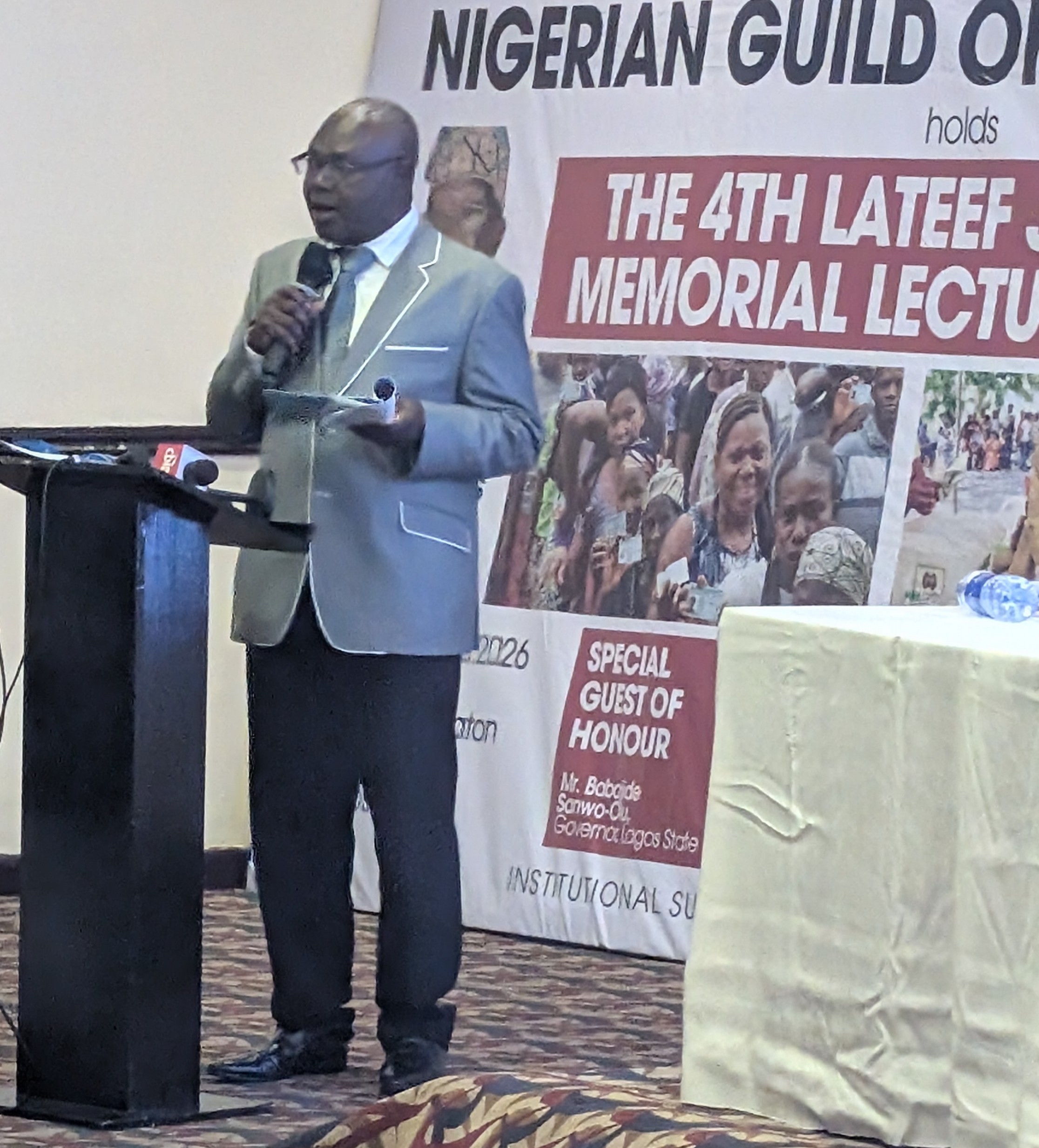 Professor Akhaine delivering his lecture.
Other attendees included Uncle Sam Amuka, publisher of Vanguard Newspapers; veteran journalist and Newswatch co-founder Ray Ekpu; members of the Jakande family, including his widow, Alhaja Sikirat Jakande; academics; media executives; public officials; civil society representatives; and students from LASU, Yaba College of Technology, and other institutions.
In his welcome remarks, Nigerian Guild of Editors President Mr Eze Anaba said the lecture was established to honour Lateef Jakande, a pioneering journalist and NGE founder who later entered politics, served as Lagos State governor from 1979 to 1983, and became Minister of Works under the Sani Abacha military regime.
He said the annual lecture honouring the former Lagos State governor provides a platform for examining Nigeria’s electoral challenges and for proposing practical ways to strengthen democracy.
“For those who may be unfamiliar with its origins, this lecture series was established in honour of the iconic journalist, statesman, politician and former Governor of Lagos State, Alhaji Lateef Jakande, in recognition of his remarkable contributions to journalism, public service and governance,” he said.
“When he and his colleagues founded the Guild in 1961, they did so in response to challenges similar to those confronting us today.
“Then, as now, the nation faced political uncertainty and economic difficulties, both of which had profound implications for the media,” Mr Anaba said.
Mr Anaba explained that the Guild of Editors has always been committed to Mr Jakande’s vision by shaping national discourse and providing principled leadership on issues of public importance.
In his address, Mr Gbenga Omotosho, the Lagos State Commissioner of Information, who represented the State Governor, Mr Babajide Sanwo-Olu, acknowledged the role of journalism in reshaping the country’s governance and democracy as the country is heading to another political season in 2027.
He also noted that the role of journalism is to maintain factual reporting, serving as the intermediary between the public and the government through the dissemination of information in the public interest.
However, Mr Omotosho decried the rising spate of false information which is being aided by the expansion of technology and Artificial Intelligence, stating that the proliferation of fake news, if not controlled as fast as possible, can endanger humanity. He further described fake news as the common enemy of information in the public, and both media practitioners and government agencies must work to combat it.
“The media have a common enemy in fake news, and we must make people understand that possession of an Android phone does not make anyone a journalist. As much as technology can be used for good purposes, it can also serve as a bad tool to peddle false narratives. For instance, AI can wipe out humanity.”
He also said the Federal Government is trying to assist the media in fighting big tech to avoid their extortion of the media. Mr Omotosho also urged the media to play its key roles in ensuring the coming election is credibly conducted.
Delivering his lecture, Professor Sylvester Akhaine said the relationship between the media, voters and the Independent National Electoral Commission (INEC) is pivotal to the outcome of the 2027 general elections. Speaking about the role of the media, the scholar said the media are “the conduits for disseminating information to the public for various purposes, namely, information, education, entertainment and shaping of public opinion. They include newspapers, magazines, books, radio, television, cinema, the internet, social media, and mobile phones.”
The Professor also explained that the INEC is Nigeria’s electoral management body (EMB). Electoral management bodies (EMBs) are responsible for the management of elections, either entirely or partly. He further stated that INEC’s role as an election management body includes the organisation of elections, monitoring them, and officially recognising election results.
He also noted that historically, the management of elections in Nigeria has had a checkered reputation, which has created doubts and trust deficits in the country’s voting system. INEC has the responsibility to confront the public’s notions about the electoral body as soon as possible.
In his description of voters, Professor Akhaine maintained that voters are citizens who can vote in an election for public office and are based on certain qualifications. ‘While both ‘voters’ and ‘electorate’ can mean the same thing, the latter is more generic, referring to the masses in a democratic setting who are the repository of popular sovereignty. The voter is covered by the principle of universal adult suffrage, which guarantees the political equality of citizens to vote without discrimination,” he said.
Having connected the media, INEC, and the electorate as significant stakeholders in the electoral system, the Professor maintained that “all stakeholders, the media, INEC, voters and the general populace have a role to play. The media must stand by the truth. It can be recalled that The Punch newspaper, in confronting authoritarian attacks on press freedom, once underlined the choice before it—to side with the people in all situations.
“The 1999 Constitution, as amended, has made the job easier for the media. The 1999 Constitution, as amended, has made the job easier for the media by stating that the media should “uphold the fundamental objectives contained in this Chapter and uphold the responsibility and accountability of the Government to the people,” thereby providing a progressive and popular ideology. Fidelity to this ideological prescription is desirable. This should be the media’s beacon as we navigate the build-up to the 2027 general elections.
INEC has its constitutional role carved out for it—to manage the elections in credible ways. The popular struggle for its autonomy has led to its empowerment in various ways, such as its trajectory to technology-driven election management, Electronic Voting System (EVS), and the hybrid status of electronic transmission of results and, fundamentally, the placement of its budget on first-line charge on the consolidated revenue of the country indicates a desire for change, however infinitesimal.
The Uwais Panel report was more futuristic, recommending that the appointive power be removed from the executive and placed in the parliament, which represents the people.
The voters require continuing education to enhance their capacity for informed choice in ways that undermine the tendency to succumb to the financial inducement of unscrupulous politicians. Both the media and INEC can accelerate their activities in this regard. If these critical stakeholders play their role, it is my conviction that the Nigerian democratic train would be steered on the right course,” He concluded.