

2027: INEC Chair Urges Equal Media Access, Warns of Misinformation Risks
Professor Joash Amupitan, Chairman of the Independent National Electoral Commission (INEC), has recognised the media as a key stakeholder in the 2027 general election. He cautioned that...

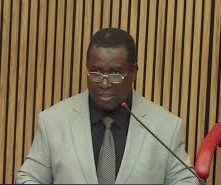
Professor Joash Amupitan, Chairman of the Independent National Electoral Commission (INEC), has recognised the media as a key stakeholder in the 2027 general election. He cautioned that misinformation and disinformation represent significant threats to the integrity of the electoral process and called upon broadcast media practitioners to respond promptly and effectively to prevent the dissemination of false narratives.
At the 81st General Assembly of the Broadcasting Organisations of Nigeria (BON), the INEC chairman noted that ensuring credible elections now depends heavily on information, and broadcast houses must act fairly and legally for the nation’s benefit.
The chairman of the electoral commission emphasised that broadcast media plays a vital role in shaping democracy by managing airwaves to ensure equal opportunity, informed choice, and accountability. Professor Amupitan noted that the Electoral Act 2026 marks a key step in Nigeria’s reforms, offering rules for fair political advertising, equal access to broadcasting, and limits on harmful content.
The INEC chairman, a Senior Advocate of Nigeria, reviewed the legal and institutional framework provided by the new electoral law regarding media independence and practical effectiveness. He also discussed how these aspects impact broadcast media coverage during elections, considering the strengths and weaknesses of the current administration.
Professor Amupitan pointed out that, under the constitution and electoral law, broadcast media platforms are required to provide equal access to all political parties during their campaigns. He noted that denying any candidate the opportunity to present their views to the public could compromise the election’s integrity, emphasising that equal access represents fairness.
Electoral fairness is fundamentally linked to ensuring equal opportunities for political competition. It demands that every political party and candidate have fair access to media outlets so they can share their platforms with voters. If broadcast access is denied or distributed unequally, it can mislead voters and harm the legitimacy of elections. The Supreme Court, in Attorney-General of the Federation v Abubakar, emphasised that the electoral process must be conducted fairly and transparently and allow equal participation by all.
While the case does not specifically address media regulation, its emphasis on electoral fairness serves as a valuable normative reference for evaluating broadcast responsibilities during elections. Additionally, broadcast media are critical in influencing public opinion through political communication. In Nigeria, where literacy rates and internet access differ greatly, radio and television continue to be the primary sources of political information. As a result, regulating these platforms significantly affects democratic participation and voter education, according to the INEC chairman.
“ In the electoral context, this creates a constitutional basis for regulating broadcast content to prevent incitement, hate speech, and misinformation.
Importantly, the Constitution recognises the right of individuals to own, establish, and operate media outlets, subject to conditions laid down by law. This has facilitated the growth of private broadcasting in Nigeria. Nevertheless, section 39(3) reserves to the Federal Government the power to regulate the ownership and operation of television and wireless broadcasting stations.
“The Electoral Act 2026 provides the principal statutory framework for the regulation of electoral processes, including the use of broadcast media during political campaigns. Although building on prior electoral legislation, the Act introduces a more structured approach to campaign regulation and media engagement.
“The relevant provisions are contained in sections 99-101 of the Act. The key issues are highlighted below:
Regulation of political campaigns and media use- Equal access to media platforms in electoral processes. A key feature of the Act is its emphasis on equal access to media platforms. Specifically, section 99 (2)-(5) provides as follows:
“State apparatus, including the media, shall not be employed to the advantage or disadvantage of any political party or candidate at any election. Media time shall be allocated equally among the political parties or candidates at similar hours of the day. At any public electronic media, equal airtime shall be allotted to all political parties or candidates during prime times at similar hours each day, subject to the payment of appropriate fees. In any public print media, equal coverage and visibility shall be allotted to all political parties”.
The above provisions of section 99 are central to the principle of equal access to media platforms in electoral processes. Their relevance can be understood from several interrelated perspectives. First, subsection (2) establishes a non-partisanship obligation on the State. By prohibiting the use of state apparatus, including publicly owned media, to favour or disadvantage any political actor, it seeks to prevent incumbency advantage. In many electoral systems, governments control significant media infrastructure; without this safeguard, ruling parties could dominate public discourse and distort electoral competition. Thus, this provision reinforces the idea that public media are a public trust, not a partisan instrument.
“Secondly, subsections (3) and (4) operationalise the principle of equality of opportunity in political communication. By requiring equal allocation of media time at similar hours, especially during prime time, they go beyond mere formal access and address qualitative equality. Airtime at off-peak hours is not equivalent to prime-time exposure; therefore, these provisions ensure that all parties can reach comparable audiences. This directly supports electoral fairness by preventing unequal visibility among contestants. With 23 registered political parties, the Act mandates fairness and balance. You must provide a level playing field, ensuring that no single interest group monopolises the airwaves.
Furthermore, subsection (5) extends the same logic to print media, mandating equal coverage and visibility.
“This is significant because electoral influence is not confined to electronic broadcasting; newspapers and other print outlets shape public opinion, agenda-setting, and voter perception. Equal coverage helps to ensure that no candidate is systematically marginalised in public discourse. Collectively, these provisions give practical effect to the democratic ideal that elections must be free, fair, and competitive. Equal access to media platforms enables voters to receive diverse viewpoints, compare political alternatives, and make informed choices. Without such guarantees, the electoral process risks becoming skewed in favour of those with greater access to media power, thereby undermining both the credibility of elections and the legitimacy of the resulting government.
Speaking about the legal consequences of violating the laws that mandate equal allocation of airtime and fairness in broadcast scheduling the INEC chairman stressed that defaulting “constitutes a criminal offence and punishment upon conviction is, for a public media, a fine of ₦2,000,000 in the first instance and ₦5,000,000 for subsequent conviction. For principal officers and other officers of the media house, the punishment is a fine of ₦1,000,000 or imprisonment for a term of six months.
The punishment regime elevates compliance from a regulatory expectation to a matter of legal obligation, signalling the importance the law attaches to electoral fairness in media coverage. Political parties and candidates are entitled to reasonable opportunities to present their programmes to the electorate through broadcast media. This reflects an attempt to operationalise the principle of electoral fairness by mitigating the structural advantages enjoyed by incumbents and financially dominant candidates.”
On false information and hate speech during the elections, Professor Amupitan explained that the Electoral Act frowns at such practices in campaigns and broadcast messages as they are capable of undermining electoral integrity.
Quoting Section 96(1) of the Electoral Act 2026, Amupitan explicates that “A political campaign or slogan shall not be tainted with abusive language directly or indirectly likely to injure religious, ethnic, tribal or sectional feelings.” In a plural society like Nigeria, such expressions can deepen divisions and trigger conflict. The provision, therefore, seeks to ensure that political messaging remains inclusive and non-discriminatory. Abusive, intemperate, slanderous or base language, insinuations or innuendoes designed or likely to provoke violent reaction or emotions shall not be employed or used in political campaigns.”
“This is intended to prevent campaigns from degenerating into hostility, misinformation, or personal attacks that may destabilise the electoral environment. These provisions are aimed at regulating the tone and content of political campaigns to preserve peace and electoral integrity, thereby promoting issue-based campaigning, discouraging hate speech, and helping maintain public order and peaceful political competition during elections. This aligns with the constitutional allowance for restrictions in the interest of public order and democratic stability. However, the challenge lies in defining the boundaries of such restrictions without encroaching upon legitimate political expression.
The Act criminalises and punishes these acts. For aspirants and candidates, their liability upon conviction is a maximum fine of ₦5,000,000 or imprisonment for a term of 12 months, while a political party is liable upon conviction to a fine of ₦10,000,000 in the first instance and ₦5,000,000 for any subsequent offence.”
In his conclusion, the INEC chairman charged the Nigeria Broadcasting Commission to perform its regulatory duties, urging the media houses to prioritise fact-checking and professional practice as the elections are approaching.
The INEC boss further appealed to industry actors to be transparent and ethical in their practice, as the credibility of the polls also depends on the fairness of the communicative environment within which political competition occurs.