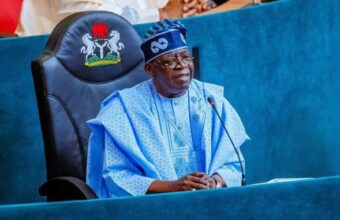


When Professor Joash Amupitan, a distinguished legal scholar, assumed the role of chairman of INEC, numerous analysts regarded his appointment as highly appropriate for the position. Several individuals noted that his extensive legal expertise could present both strengths and weaknesses.
Others familiar with his background at the University of Jos expressed reservations regarding his appointment, citing his limited engagement in ASUU activities. According to them, aside from fulfilling subscription requirements, he has not been recognised for involvement in pro-union or pro-community advocacy within ASUU.
He takes the job with his academic experience as a lawyer and a Senior Advocate of Nigeria but without the activism background of Professor Jega and without the extensive technocratic experience of Professor Mahmood Yakubu. Each person has a unique experience. Whether Prof. Amupitan’s predecessors in office would have managed the INEC and African Democratic Congress dispute differently is uncertain.
What is emerging is that INEC’s reactions to the opposition parties since his assumption of office have further diminished trust and confidence in the ability of the electoral umpire to organise a free, fair and credible election. By its actions, INEC has to be very careful, as the perception is that the commission is implementing a playbook written by the ruling APC government to destroy all opposition parties in Nigeria.
ADC’s internal issues and INEC’s reading of a Federal High Court ruling may have involved the Commission in the dispute. According to Prof. Amupitan, his commission did not take the matter to court but was properly joined in the suit. He said that since there were orders deliberately mentioning that INEC should not take certain actions, those orders had to be ordered, and it was in its interpretation of one of those orders that the commission had to pull down the names of David Mark and Rauf Aregbesola as legitimate leaders of the ADC.
INEC’s lengthy explanation on the matter leading to the de-recognition of the David Mark-led leadership of the ADC by the INEC gives the impression that the INEC is part of a grand scheme to destroy all opposition parties. The fundamental question is, what is the “status quo ante bellum” which the Court of Appeal ordered to be maintained? Was it the status quo before the emergence of David Mark and Rauf Aregbesola as the chairman and National Secretary of the ADC? Or was it the status quo before their emergence?
In his controversial media chat on Friday, Minister Nyesom Wike displayed more than a passing interest in the ADC internal affairs. He explained the brief in support of Nafiu Gombe and traced the origin of the crisis with the dexterity of an insider, prompting one of the interviewers to enthuse that “no wonder the opposition feels the government is interested in the matter.
What does the APC government want the INEC to do? Towards the end of Prof. Yakubu’s term as INEC Chairman, the commission announced it had prequalified 14 associations as political parties, among them the ADA, which is associated with members of the ADC coalition. Soon afterwards, reports circulated that the INEC chief had been sacked. Why would registering new political parties, one of the statutory duties of the commission, lead to the rumour of the sack of the INEC boss? Many are still asking.
When considering these developments together, one may reasonably conclude that the ruling party or government, with assistance from INEC, is orchestrating the crisis in the ADC. It has been speculated that the APC may not want a real presidential contest in 2027 because of the perceived anger of the masses against its policies, which have inflicted hardships on the average household.
INEC, still smarting from its loss of people’s trust in the aftermath of the 2023 presidential elections, when it suffered a huge trust deficit because of its famous “glitch” narrative, should be mindful of its image and confidence-building strategy in the outcome of the 2027 elections. For instance, what would INEC lose by not removing David Mark and Rauf Aregbesola’s names from its portal? That was, after all, the prevailing situation when the Court of Appeal issued its judgement. INEC has been quick to execute orders of the court unfavourable to the opposition political parties.
As stated by Barr Femi Falana, SAN, recently, the judiciary has made itself a willing tool in the muzzling of opposition parties by giving controversial judgments. He cited the cases of the Labour Party and the People’s Democratic Party. He disagreed with the interpretation by INEC of “status quo ante bellum”. In the same vein, Prof Chidi Odinkalu has also submitted that nothing in the Court of Appeal Orders requested the de-recognition of David Mark’s group of the APC.
Certain political analysts suggest that the timing of the Court of Appeal’s order, along with its perceived biased interpretation, is intended to impede the increasing influence of the ADC, which has recently attracted several prominent defectors. Creating instability in the leadership of the ADC and a subtle threat of non-recognition of its congresses and convention by the INEC will create doubt in people and stop the migration to the party.
ADC Takes Its Democratic Fight Global
In a statement on Saturday, the ADC spokesperson, Mr Bolaji Abdullahi, said the party is taking its battle against the INEC de-recognition internationally. His statement reads:
“As part of our efforts to strengthen international engagement, we are establishing a Special Representatives Network across key global capitals to engage foreign governments, amplify credible information about Nigeria’s political environment, and counter one-sided government narratives.
“This comes amid growing attacks on our members, attempts to undermine our leadership, and efforts to restrict political participation ahead of the 2027 general elections.
“Our representatives will engage foreign governments, international media, democracy institutions, and the Nigerian diaspora, providing regular briefings on political developments, human rights concerns, and electoral integrity.
“We are also launching a National Documentation Initiative to systematically track and report incidents affecting political participation across Nigeria.
“From Washington DC to London, Brussels to Addis Ababa, ADC is building a global platform for accountability. Nigeria’s democracy must be seen, heard, and defended everywhere.”
This remains an ongoing contest involving both legal expertise and intellectual strategy, hence INEC vs. ADC: Legal Dispute or Proxy Battle?