Sanwo-Olu, Lai Mohammed Urge Media to Combat Fake News, Avoid Incendiary Reporting
As Nigeria prepares for the 2027 general elections, stakeholders have urged the media to strengthen fact-checking, expose disinformation and deliver responsible coverage that informs voters without...


As Nigeria prepares for the 2027 general elections, stakeholders have urged the media to strengthen fact-checking, expose disinformation and deliver responsible coverage that informs voters without worsening political, ethnic or religious divisions.
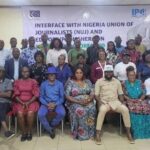
The call came at the 7th Freedom Online News yearly lecture, held Thursday at the Sheraton Hotel, where politicians, media practitioners and other stakeholders discussed Nigeria’s challenges and prospects ahead of the 2027 elections.
The lecture, themed “2027 Elections: Economy, Security and Nigeria’s Future”, was attended by the Governor of Lagos State, Mr Babajide Sanwo-Olu, who was also the keynote speaker; the former governor of Ogun State, Gbenga Daniel; and the former minister of information, Lai Mohammed, who chaired the event, among other dignitaries.
The event served as a platform to prepare the media and the citizens ahead of the general election, where the speakers warned that the media would face increasing pressure during the election period, particularly from fake news, anonymous accounts and manipulated videos capable of misleading voters and influencing public perception.
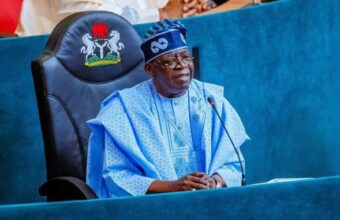
In his speech, Governor Babajide Sanwo-Olu urged the press to be rigorous rather than compliant, saying journalists must continue to scrutinise those in power and hold public officials accountable.
As the 2027 general elections approach, Governor Babajide discusses the role of journalism in achieving a credible poll, citing the importance of the elections for the country’s development and progress. He stated that the trajectory of the Nigerian electoral system has improved and that the Osun election demonstrated that any party can win an election if it supports the people.
He also mentioned the Osun election and its outcome as evidence that the common notion of federal might could sway the conduct of the election; instead, he praised President Bola Tinubu for allowing a free and fair election without interference from the federal government.
“Our elections have improved. Anyone who covered the elections of the 2000s, as many in this hall did, knows how far we have come, and much of that distance was travelled on this party’s watch: the Electoral Act of 2022 and now the Electoral Act of 2026, and the technology that verifies voters and transmits results. But this is not the moment to rest on our oars. INEC must be ready in every polling unit on the 16th of January and again on the 6th of February, and each of us has a duty to help it be ready.
“I want to say something about the President and this process, and I want to say it with a recent example, because an example is worth more than an assurance. Nineteen days ago, on the 15th of August, the people of Osun State elected a governor. The candidate of my party, the President’s party, lost. The incumbent, Governor Ademola Adeleke, of a different party, won by more than sixty thousand votes. The President did not sulk, and he did not equivocate. He picked up the telephone the following day, congratulated the winner, urged him to unite the State, and thanked INEC and the security agencies for a peaceful and transparent election. Governor Adeleke has since publicly thanked the President for ensuring a level playing field. Think about what that means. There was a time in this country when “federal might” was a phrase that a ruling party used without
“Distinguished ladies and gentlemen, one hundred and thirty-five days from now, Nigerians will do something no generation before ours ever did: elect a President, peacefully and on schedule, for the eighth time in succession. Nigeria’s future will not be decided on the 16th of January. It will be decided by what we do with the mandate on the 16th of January. Distinguished ladies and gentlemen, you cannot discuss 2027 and leave out the 36 governors. Nigeria is not one economy but thirty-seven: 36 States and the Federal Capital Territory. The people who manage those economies will largely determine the outcome of this election, whether they intend to or not.
Mr. Sanwo-Olu urged media practitioners and journalists not to comply with the status quo but to take responsibility in combating false information during the election.
He stressed that patriotism in journalism should not amount to propaganda but should involve refusing to allow those seeking to undermine the country to dominate the national narrative.
“I am not asking for a compliant press. A compliant press is of no use to a democracy; it flatters the powerful and abandons the public. I am asking for a rigorous press. Check the facts, mine included. Call out disinformation wherever it comes from, including from my own side. In the weeks ahead, the most dangerous lies will not come from newspapers. They will come from anonymous accounts and them. Doctored videos, and you are the institution best placed to answer. Responsible Journalism Ahead of Election
“I am asking you to look where others do not. Our deputy governorship candidate in Lagos is a woman, extending a tradition in which women have held that office four times out of seven since 1999, including an unbroken run from 2007 to 2019. Women remain badly under-represented in our politics; cover the women who are running. Young people are trying to break in; cover them too.
“And I am asking you to tell the whole story. I am not asking you to hide this country’s problems. I am asking you to give the same energy to what is working: the business that opened, the student who got the loan, and the town whose road finally arrived. There is a place for patriotism in journalism. Patriotism is not propaganda; it is the refusal to let those who wish this country ill have the last word about it.”
Calling for accountability among politicians, Mr Sanwo-Olu maintained that the voters are expecting them to perform in accordance to the improved allocations which states are now receiving. “Voters may not be economists, but they are excellent accountants. They know whether their State built the road it promised. They know whether the primary health centre has a nurse in it. They will bring that ledger with them to the polling unit.
“Let me be candid with my colleagues because I have sat where they sit for seven years. Under this President, the States have had it very well. Since the subsidy was removed, the monthly allocations to States and local governments have more than doubled in naira terms. The President has done his part; the money is arriving. What is done with it is on us. The excuses have been removed, and the electorate knows it,” he noted.
In his address to the media, former Minister of Information and Culture, Lai Mohammed, similarly charged the media to approach the 2027 electoral process with responsibility, warning against sensationalism, fake news and incendiary reporting.
Mohammed said the media has the power to inform citizens, interrogate claims, expose falsehoods, and provide platforms for competing ideas, but it can also worsen divisions when deployed irresponsibly. He called for a media that is robust but not reckless, critical without being destructive, patriotic without becoming partisan, and free while recognising the responsibilities that come with press freedom.
According to him, responsible journalism is particularly important during elections because media reports can influence public perception, economic confidence and national security. He urged journalists to shift the focus of electoral discourse toward policies, competence, and concrete solutions rather than ethnic, religious, and partisan sentiments.
In his submission, the Senator representing Ogun East and the former governor of the state, Otunba Gbenga Daniel, said insecurity should be treated not only as a security challenge but also as an economic problem because fear affects farming, transportation, business operations and investment.
He said Nigeria’s economic potential, particularly its young population, entrepreneurial culture, technology sector, financial institutions and creative economy, could only be fully realised if citizens were given opportunities to participate productively in the economy.