Democracy Day: Ministers List Renewed Hope Agenda’s Gains, Pay Tribute to MKO Abiola
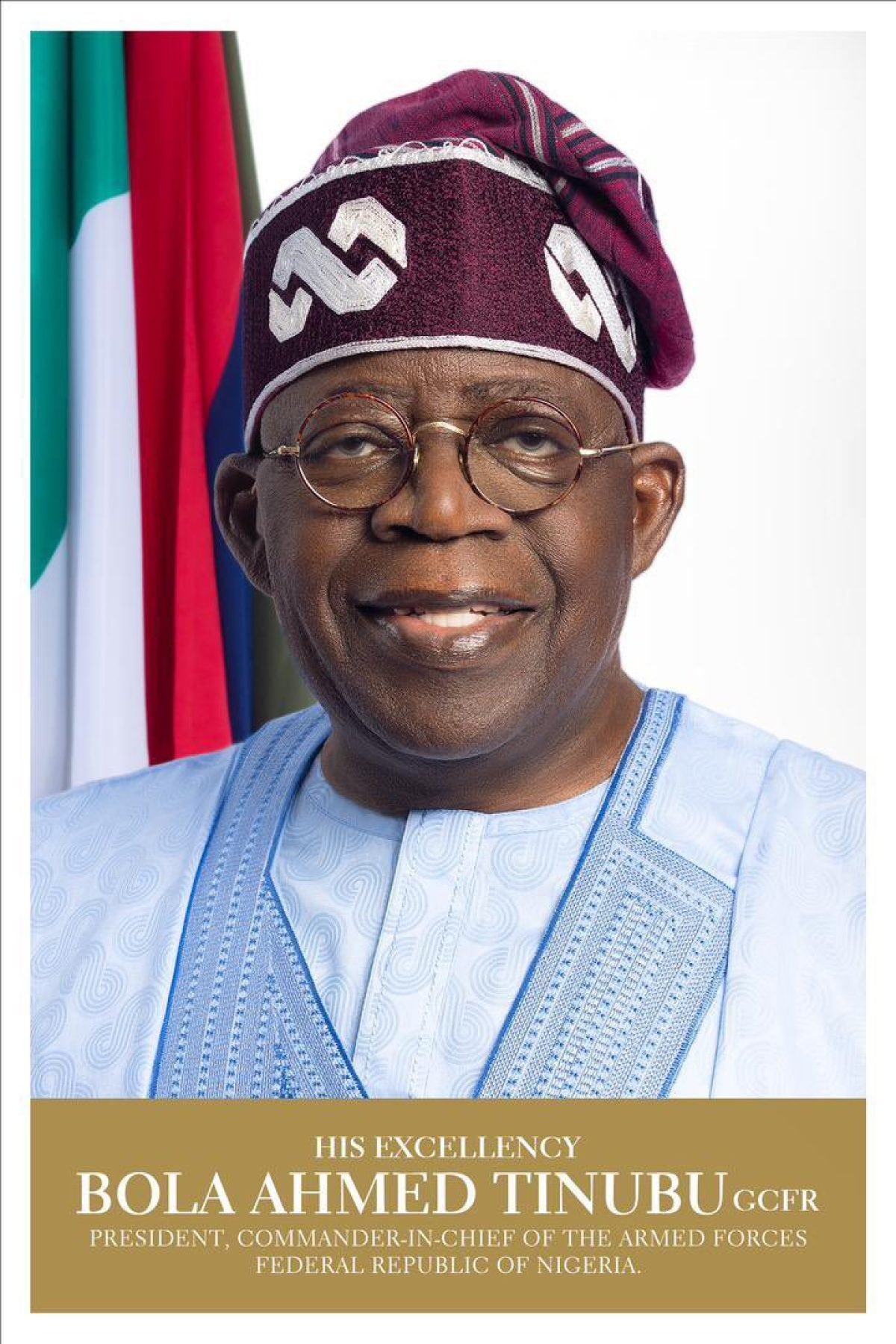
Marking 27 years of uninterrupted democracy since 1999 and the third anniversary of President Bola Tinubu’s administration, the federal government on Tuesday in Abuja gave its Renewed Hope Agenda...

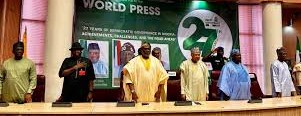
Marking 27 years of uninterrupted democracy since 1999 and the third anniversary of President Bola Tinubu’s administration, the federal government on Tuesday in Abuja gave its Renewed Hope Agenda high marks while acknowledging that the country remains a work in progress.
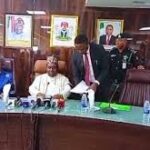
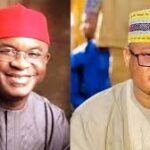
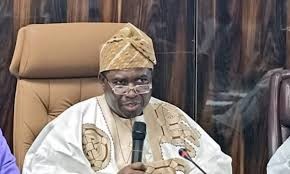
At a World Press Conference, which was held at the Rotunda Hall of the Ministry of Foreign Affairs, Abuja, dignitaries in the administration attended, including the Secretary to the Government, Senator George Akume; the Minister of Information and National Orientation, Mohammed Idris; the Minister for Livestock Development, Alhaji Idi Mukhtar Maiha; the Minister for Water Resources and Sanitation, Engr Prof. Joseph Terlumun Utsev; and the spokespersons to the President, Mr Bayo Onanuga and his colleague Mr Daniel Bwala.
Presenting the administration’s scorecard, the Secretary to the Government of the Federation (SGF), Senator George Akume, highlighted its achievements and said that despite recent hardships and security challenges, Nigeria is on the path to recovery.
He defended the economic and social reforms introduced by President Bola Tinubu’s administration, noting that the President has remained focused on delivering tangible benefits to Nigerians through the Renewed Hope Agenda, and that reforms in key sectors of the economy are already yielding measurable results
Akume, who is also the chairman of the Interministerial Committee for Democracy Day 2026, maintained that Nigeria’s economy has recorded steady growth, with real Gross Domestic Product (GDP) expanding by 4.07 per cent in the fourth quarter of 2025 and 3.89 per cent in the first quarter of 2026.
Acknowledging that inflation and insecurity continue to affect citizens, the SGF maintained that the government’s reforms were beginning to produce tangible results, noting that over three million vulnerable households had benefited from the Renewed Hope Conditional Cash Transfer Programme. At the same time, one million Nigerians had accessed support under various government credit schemes.
“The policy decisions of this administration, including the removal of the fuel subsidy and foreign exchange reforms, were difficult but necessary. They have created fiscal space for critical investments in infrastructure, social interventions, education, healthcare, and economic development. As revenues improve and the economy stabilises, Nigerians will increasingly experience the benefits of these reforms,” the SGF said.
“Government will never claim that every challenge has been solved,” he said. “Inflation has been painful, though it is on a downward trend. Insecurity still threatens lives and livelihoods, but evidence shows that the country is moving in the right direction.”
On education, Akume said the Nigerian Education Loan Fund (NELFUND) had supported more than 1.058 million students since the implementation of the Student Loan Act, with over N184 billion released for tuition and upkeep allowances.
He added that the administration had expanded access to healthcare through the National Health Insurance Scheme framework and increased funding for primary healthcare facilities nationwide, while noting that proceeds recovered by anti-graft agencies had strengthened public interventions, including the transfer of more than N50 billion in recovered assets to support NELFUND.
According to him, Nigeria’s removal from the Financial Action Task Force (FATF) grey list in October 2025 reflected the impact of reforms in anti-money laundering and counter-terrorism financing.
On security, the SGF said the Federal Government was investing heavily in military capabilities and regional cooperation to combat terrorism, banditry and other criminal activities, urging
citizens to complement government efforts by remaining vigilant and reporting suspicious movements to security agencies.
“We can say clearly that institutional responses are being sharpened, coordination is improving, and reforms are continuing because peace and civic order are foundations of democratic progress,” he stated.
Speaking on the 27 years of uninterrupted democracy in Nigeria, Senator Akume congratulated Nigerians for sustaining 27 uninterrupted years of democratic governance, describing the feat as one of the longest democratic experiences on the African continent.
Making references to the efforts of the pro-democratic individuals and groups that fought for democracy in the country, the SGF acknowledged the role of the winner of the June 12 1993, general election, Chief Moshood Kashimawo Abiola, whose role he described as sacrificial and others, noting that uninterrupted democratic governance is a major national achievement and a testament to the resilience of the Nigerian people and democratic institutions.
In his speech, the Minister of Information and National Orientation, Mohammed Idris, said Nigeria’s 27 years of uninterrupted democracy provide an opportunity to celebrate the resilience of its institutions and honour the patriots who fought for democratic governance.
The minister also paid tribute to Chief Moshood Kashimawo Olawale (M.K.O.) Abiola, praising his commitment to democratic ideals and the inspiration he continues to offer generations of Nigerians. He also recognised other Nigerians, including President Bola Ahmed Tinubu, for their roles in the pro-democracy movement and in restoring democratic rule in the country.
“Twenty-seven years of uninterrupted democratic governance is a milestone worthy of celebration. It is a testament to the determination of Nigerians to uphold democratic values, strengthen national institutions, and continuously strive for a more prosperous and united nation.
This year’s Democracy Day is especially significant because it coincides with the third anniversary of the Renewed Hope Administration. It provides an opportunity to assess the nation’s progress, review the impact of ongoing reforms, and reaffirm our shared commitment to building a stronger, more inclusive Nigeria.
He also described President Bola Tinubu’s administration and the Renewed Hope Agenda as resilient despite the challenges they have faced. He added that the government remains committed to fulfilling the promises of the agenda.
In his address, Minister of Livestock Development Alhaji Idi Mukhtar Maiha said his ministry’s goal is to strengthen food security and boost livestock production. He added that the government is working to resettle pastoralists in designated grazing reserves within the Federal Capital Territory (FCT) to curb migratory grazing and reduce conflicts linked to livestock movement.
The minister said environmental pressures have worsened the herders-farmers crisis and contributed to insecurity. He explained that while farmers are cultivating crops, herders are struggling to find feed and water for their livestock, a situation that has fuelled conflict. “The reason pastoralists move from the North to the South is not cultural. It is a survival mechanism. These animals need water and pasture to survive,” he said.
He added that the federal government has begun consultations with pastoralist groups, including Miyetti Allah, and traditional leaders on the planned resettlement programme, which will be implemented democratically and in phases. He said most of the nation’s livestock assets are privately owned and that the government’s role is to create an enabling environment for investment and industry growth. According to him, private individuals and companies own about 95% of Nigeria’s livestock resources. “The federal government does not intend to take them over. Our role is to create an enabling environment for livestock businesses to thrive,” the minister said.
The Minister of Resources and Sanitation, Engineer Prof. Joseph Terlumun Utsev, also highlighted the accomplishments of his ministry under the current administration in his remarks. He stated that the ministry had expanded access to drinkable water by building and commissioning significant water supply projects, such as the Federal Capital Territory’s water projects, Yobe State’s Damaturu Water Supply Project, and the Gombe Regional Water Supply Scheme.
He further explained that some of the additional water schemes executed under partnerships with programmes such as PEWASH, SURWASH, and the African Development Bank have benefited more.
He also revealed that the government had finished and put into service important dam projects, such as the Amla Dam in Benue State, the Do’o To’o Ape Dam in Kogi State, and the Rafin Yashi Dam in Niger State, which supply water for domestic use, irrigation, fisheries, and livestock development.
“We have also combined hydropower generation, that of the Kashimila, the Gurara, and Tadigua projects, which are approximately supplying 110 megawatts for clean energy. We have also concessioned the Kashimila Hydropower Plant and Agro-Align Cargo Airport, which has so far generated about 7 billion Naira as revenue to the government,” he said
The minister added that plans were in motion to concession the Dasin Hausa Dam in Adamawa State to improve flood control, irrigation, water supply, fisheries, and agriculture, while rehabilitation efforts were in progress at the Oyan Dam in Ogun State, Goronyo Dam in Sokoto State; Ate Dam in Benue State; and Lafia Dam in Nasarawa State.
Speaking at the conference, the Special Adviser to President Tinubu on Information and Strategy, Mr Bayo Onanuga, reminisced on Nigeria’s journey to the Fourth Republic and the struggles of many Nigerians. He urged the country to emulate the attributes of Chief MKO Abiola as a nationalist who did not segregate among ethnic groups but represented unity. Nigeria represents